Forex Margin & Leverage Calculator
Margin is collateral required to open or maintain a leveraged position; it is not the maximum possible loss. This calculator estimates notional value and simple initial margin from lots, price, leverage, and an optional account-currency conversion multiplier. Venue rules, instrument tiers, regulatory limits, and portfolio offsets can produce a different requirement, so the broker or clearing venue remains the authoritative source.
Updated September 21, 2026 · Inputs stay in your browser
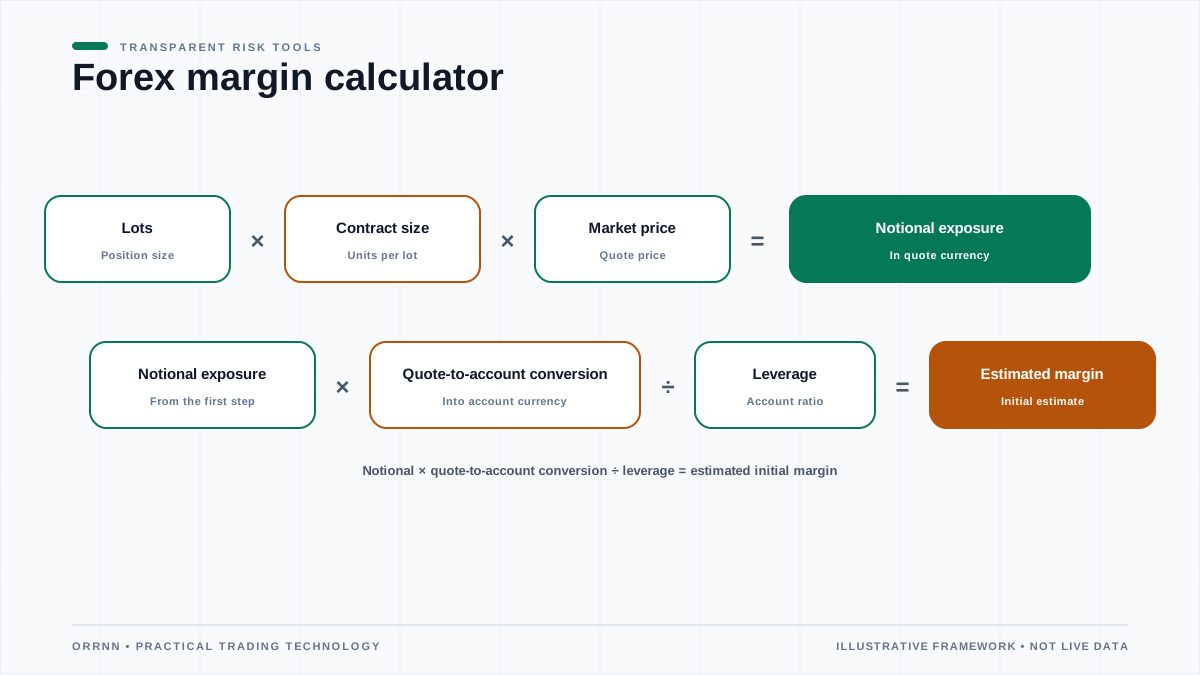
Educational estimate only. Confirm instrument specifications, live conversion rates, fees, margin rules, and order details with the relevant regulated provider.
Formula and assumptions
The formula first estimates notional value in quote currency, converts it to the account currency, and divides by the selected leverage ratio. A leverage input of 30 represents 30:1. Some instruments are margined from base-currency notional or use fixed contract values; inspect the contract specification before relying on the estimate.
How to use the calculator
- 01Enter standard lots and the current instrument price.
- 02Enter the permitted leverage ratio for the account and instrument, not a promotional maximum that may not apply.
- 03Use 1 when quote and account currency match; otherwise supply a current quote-to-account conversion multiplier.
- 04Compare estimated margin with free margin, maintenance thresholds, open positions, and the venue’s liquidation or close-out rules.
How to interpret the result
- Notional value describes market exposure before leverage. It can be much larger than the cash placed as margin.
- Estimated initial margin is the simple collateral calculation at the chosen leverage. Lower leverage produces a larger margin requirement for the same position.
- Free margin after entry is not a safe-loss allowance. Adverse movement, fees, spread expansion, and other positions can reduce it rapidly.
Worked example
One standard lot at a price of 1.1000 represents 110,000 of quote-currency notional. At 30:1 leverage and a conversion multiplier of 1, the simple initial-margin estimate is 3,666.67. That number is collateral, not a prediction of the trade’s loss or safety.
Limits and risk controls
- The tool does not model maintenance margin, tiered rates, concentration add-ons, hedged-position treatment, dynamic margin, liquidation fees, or portfolio offsets.
- Leverage amplifies losses as well as gains. A position can lose more than its initial margin depending on the product, jurisdiction, account agreement, and market conditions.
- Regulatory and broker leverage limits differ by client classification, instrument, and country. Always use the limit actually assigned to the account.
These tools provide educational estimates, not investment, legal, tax, or risk-management advice. Leveraged products can produce losses greater than the amount initially deposited. Confirm every result with the provider’s live order ticket, contract specification, account agreement, and applicable rules.