Forex Trading & Brokerage Technology Tools
Calculators for position size, pip value, risk-to-reward, margin, and drawdown, plus a planner for brokerage technology costs. Each tool shows its formula, its inputs, and where real broker rules can change the result.
The calculations run in your browser, and your inputs are not sent anywhere. They are educational estimates built from the numbers you enter. They are not investment, legal, or regulatory advice.
Choose a tool
Showing all 6 tools.
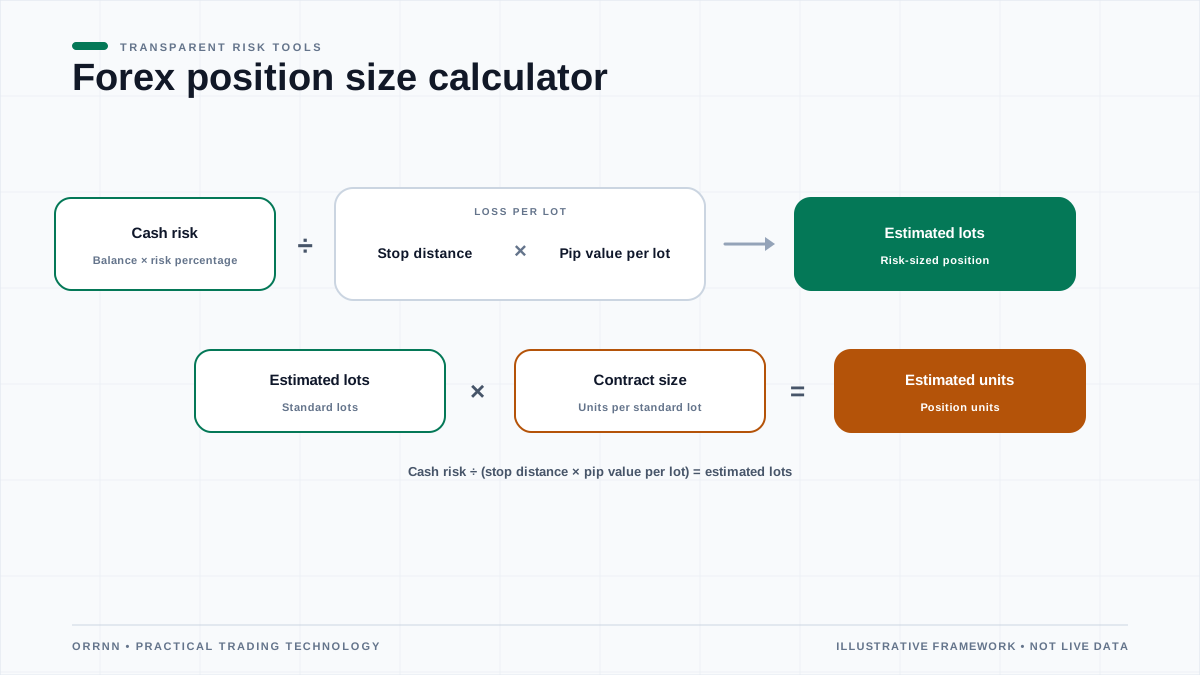
Forex Position Size & Lot Size Calculator
How many lots can I trade if I risk a set percentage of my account on a given stop distance?
Open calculator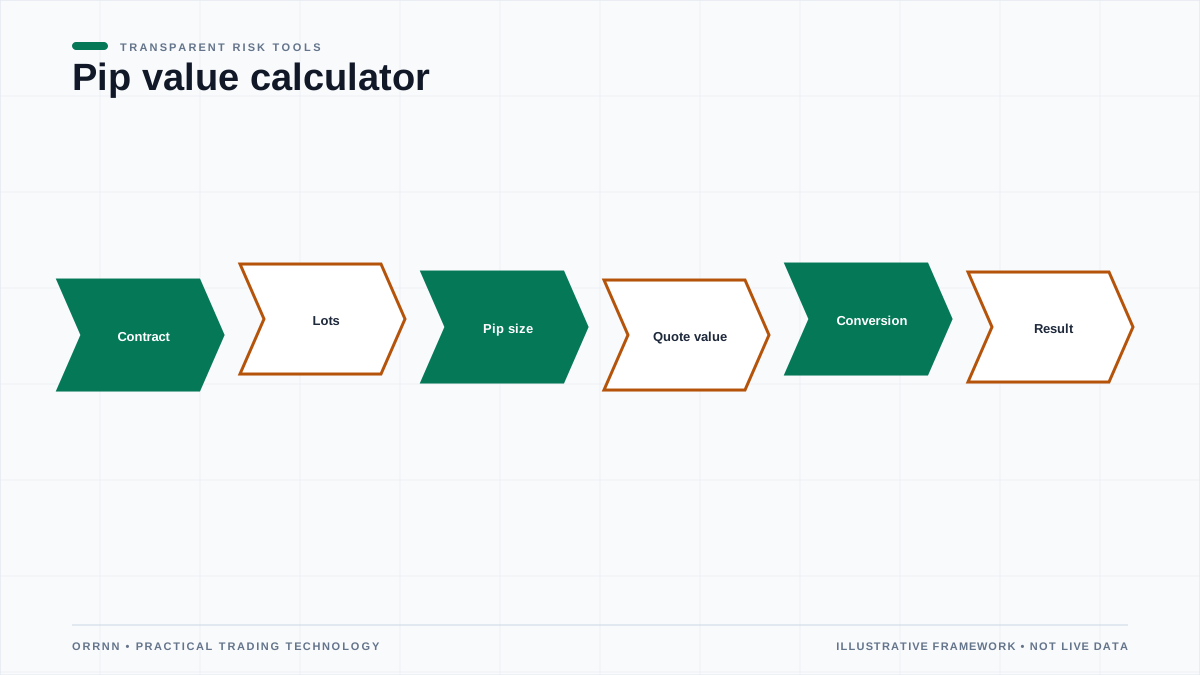
Forex Pip Value Calculator
What is one pip worth, in my account currency, for a given position size?
Open calculator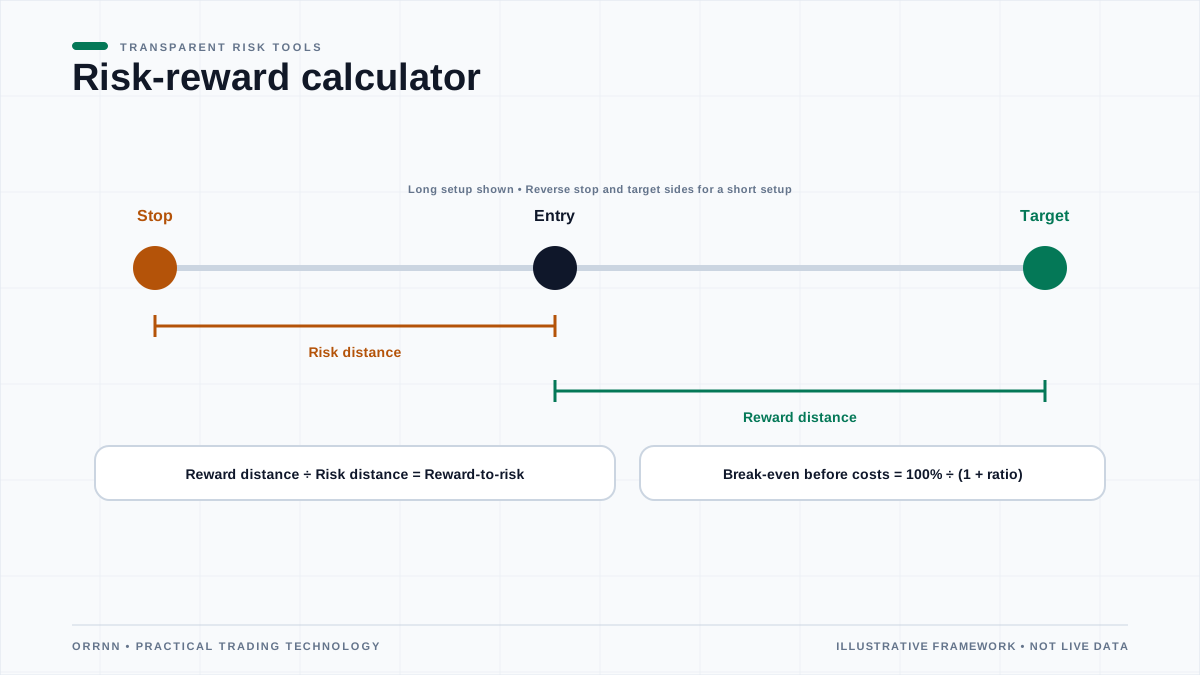
Trade Risk/Reward Ratio Calculator
How large is the potential reward compared with the risk on a planned trade?
Open calculator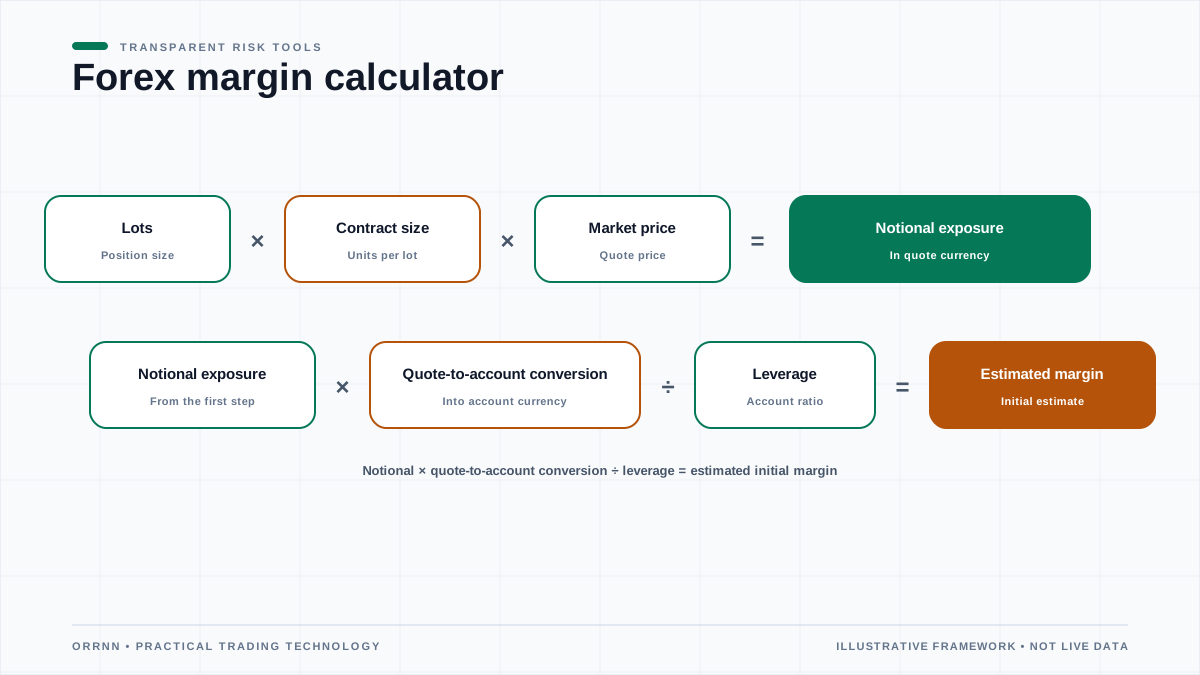
Forex Margin & Leverage Calculator
How much initial margin might a position tie up at a given leverage?
Open calculator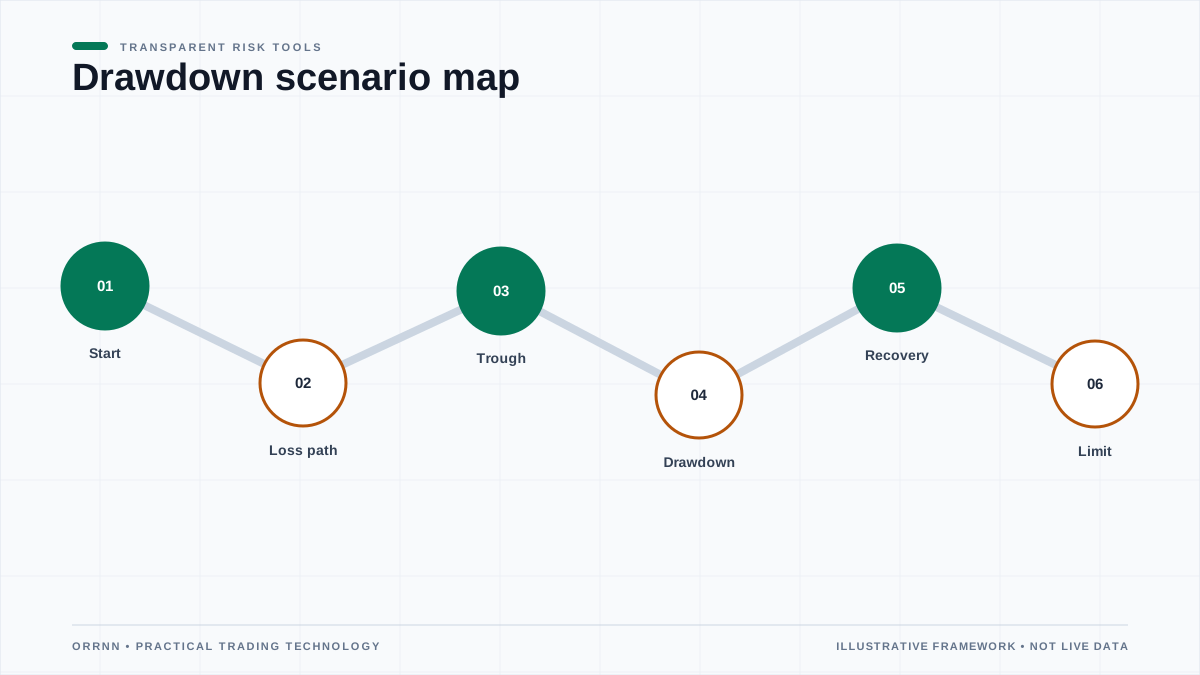
Drawdown and Recovery Calculator
How far is an account below its peak, and what gain is needed to get back?
Open calculator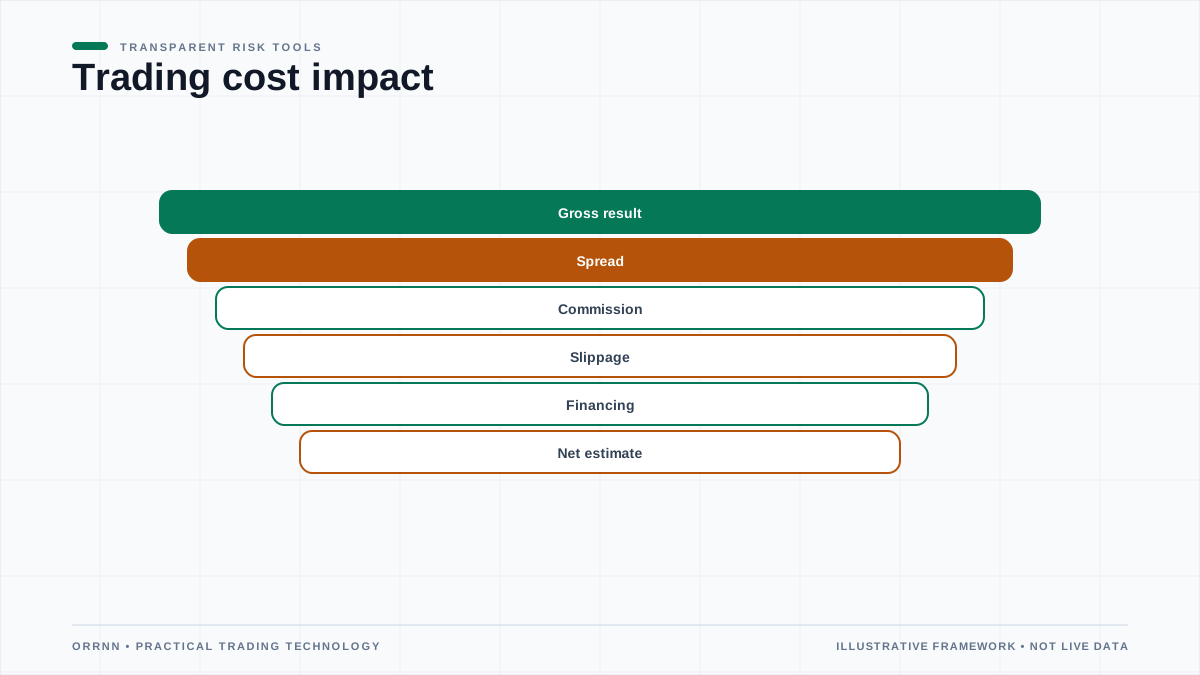
Brokerage Technology Cost Planner
What does my technology stack cost over a chosen period, using the quotes I have collected?
Open calculatorEvaluation checklists and related guides
Checklists suit vendor evaluation better than calculators. These existing pages cover them in more depth.
Platform procurement checklistLiquidity provider due diligenceBroker CRM requirements checklistTrading platform comparison frameworkLiquidity bridge evaluationVPS sizing guideWebSocket vs REST vs FIX.
For broader reading, see the technical Guides and the Broker Guides.
What they cannot decide
A calculation cannot show that a trade is suitable, profitable, legal in your jurisdiction, or likely to execute at the displayed price. Real outcomes depend on spreads, commissions, gaps, liquidity, margin tiers, broker rules, tax, and execution. Check contract specifications and margin rules with your broker. The US CFTC warns that leveraged retail forex can amplify losses, and its forex customer advisory is worth reading. Take legal and regulatory advice from qualified professionals.
Frequently Asked Questions
Position size, pip value, margin, risk-to-reward, and drawdown calculators cover the most common planning questions. They help you understand relationships between size, risk, and capital, but they do not predict results.
Work out the amount you are willing to risk (balance x risk percentage), then divide it by the stop distance in pips times the pip value per lot. The result is the lot size, as in the position size calculator above.
Multiply the position's units (lots x contract size) by the pip size to get the pip value in the quote currency, then convert it to your account currency if they differ.
Estimate the position's notional value in your account currency and divide by leverage. Your broker's actual margin rules decide the real figure.
The distance from entry to target divided by the distance from entry to stop. A ratio of 2 means the potential reward is twice the potential loss. It says nothing about how likely each outcome is.
No. They assume forex-style quotes and a pip-based stop. Indices, metals, crypto, and CFDs can have different contract sizes, tick values, and margin rules, so check the specification before relying on a result.
Brokers set their own leverage limits, margin tiers, currency conversion, and rules, and these may be shaped by regulation and by the client's category. They can also change over time.
A cost planner built on real supplier quotes, plus checklists for procurement, platform comparison, CRM, and liquidity due diligence. See the Broker Guides.
Write your requirements first, ask each vendor to demonstrate them and to confirm scope in writing, and compare total cost. The platform comparison framework gives a method.
No. Results are estimates from your inputs and may differ from your broker's pip values, margin, conversion rates, and fills.
Building or upgrading your trading technology infrastructure?
Brokerage founders and institutional teams can contact Orrnn to discuss technology requirements and look at the trading software Orrnn develops. Product scope, integrations, and commercial terms are confirmed in writing. Orrnn is a software development company and does not provide investment, brokerage, or licensing services.