Guide 013,272 words
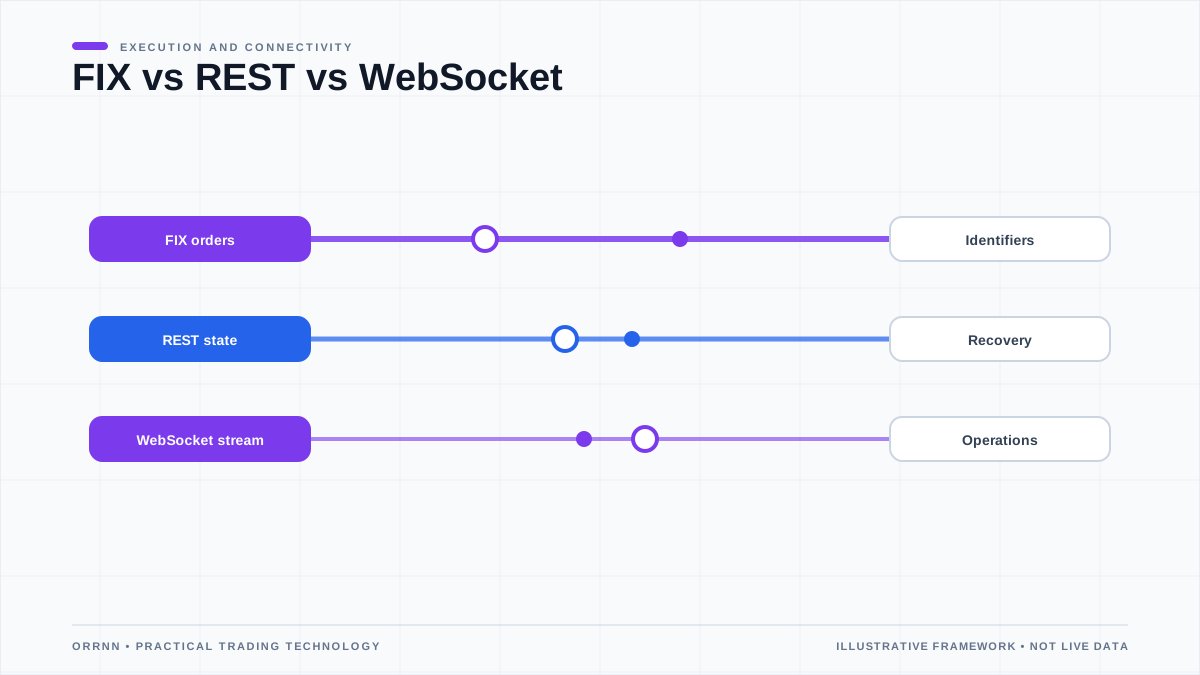
WebSocket vs REST vs FIX: Which Trading API to Use
Compare WebSocket vs REST vs FIX for trading APIs: session model, market data, order entry, recovery, and when each fits brokers, providers and funds.
Read guidePractical, evidence-led guides for understanding, evaluating, and planning trading technology. Topics include platform procurement and migration, FIX and API connectivity, infrastructure measurement, liquidity and order routing, broker operating controls, and backtesting.
Each guide sets out its assumptions, limitations, and primary sources, so you can adapt the framework to your own entity, jurisdiction, and technology stack.
Orrnn Guides are educational resources about the technology behind trading businesses. They are written for broker and prop-firm teams, hedge funds and institutional desks, quantitative and algorithmic researchers, fintech founders, CTOs, infrastructure and DevOps teams, and the operations and procurement managers who have to choose between systems.
Use them to frame a requirement before approaching suppliers, to prepare questions for due diligence, to design a measurement or test plan, or to understand an unfamiliar protocol or architecture layer. Critical facts should always be checked against primary sources, such as vendor documentation, protocol specifications, and regulator publications.
New specialist collection
Explore a source-backed launch collection built around operating responsibilities and procurement evidence—not unsupported vendor promises.
Three recently updated guides that address common architecture and platform questions.
Compare WebSocket vs REST vs FIX for trading APIs: session model, market data, order entry, recovery, and when each fits brokers, providers and funds.
Read guide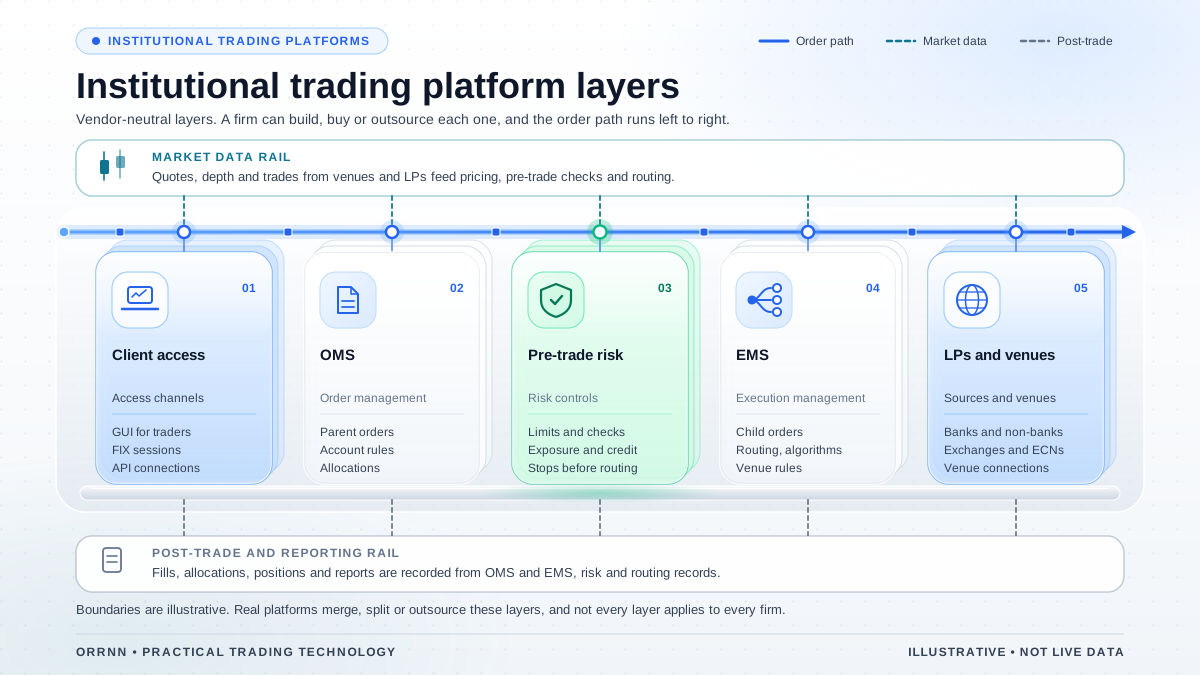
What an institutional trading platform does, the OMS, EMS, risk, market data and FIX layers it needs, and how it differs from a retail platform.
Read guide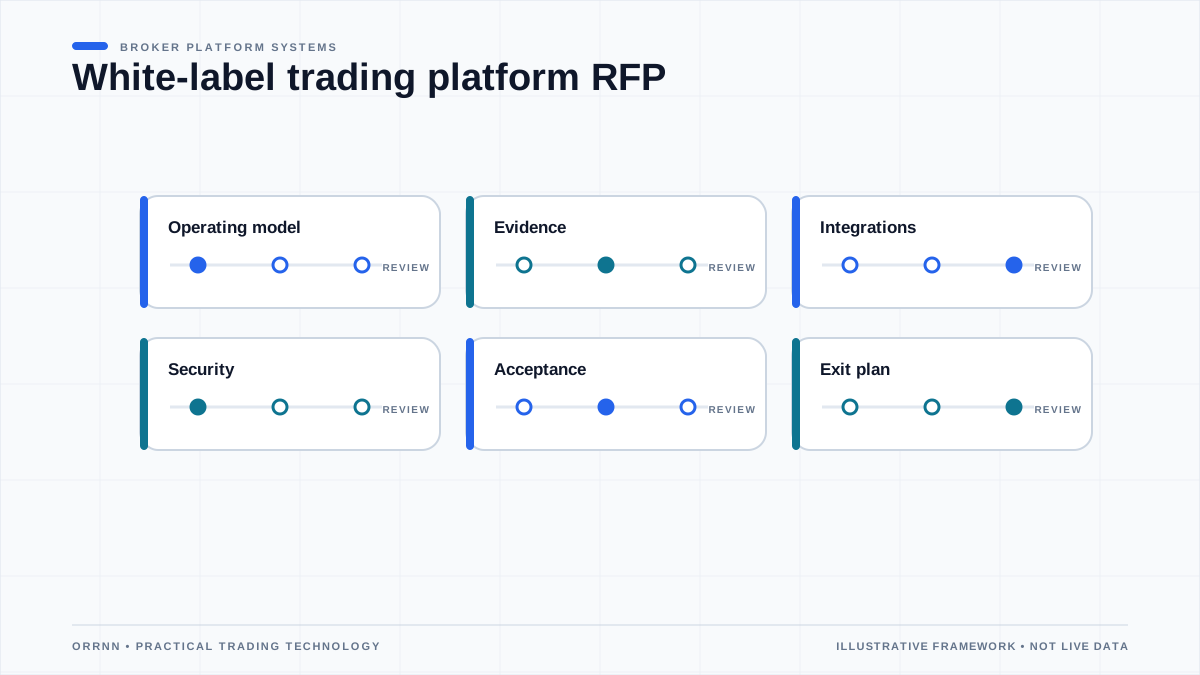
A practical framework for evaluating a white-label trading platform, writing an evidence-led RFP, comparing vendors, and planning due diligence.
Read guideTwelve published guides in six topic areas. Search by title or topic, or filter by category.
Showing all 12 guides.
Guide 01Write requirements, structure an evidence-led RFP, and compare white-label vendors with a due-diligence plan.
Read guide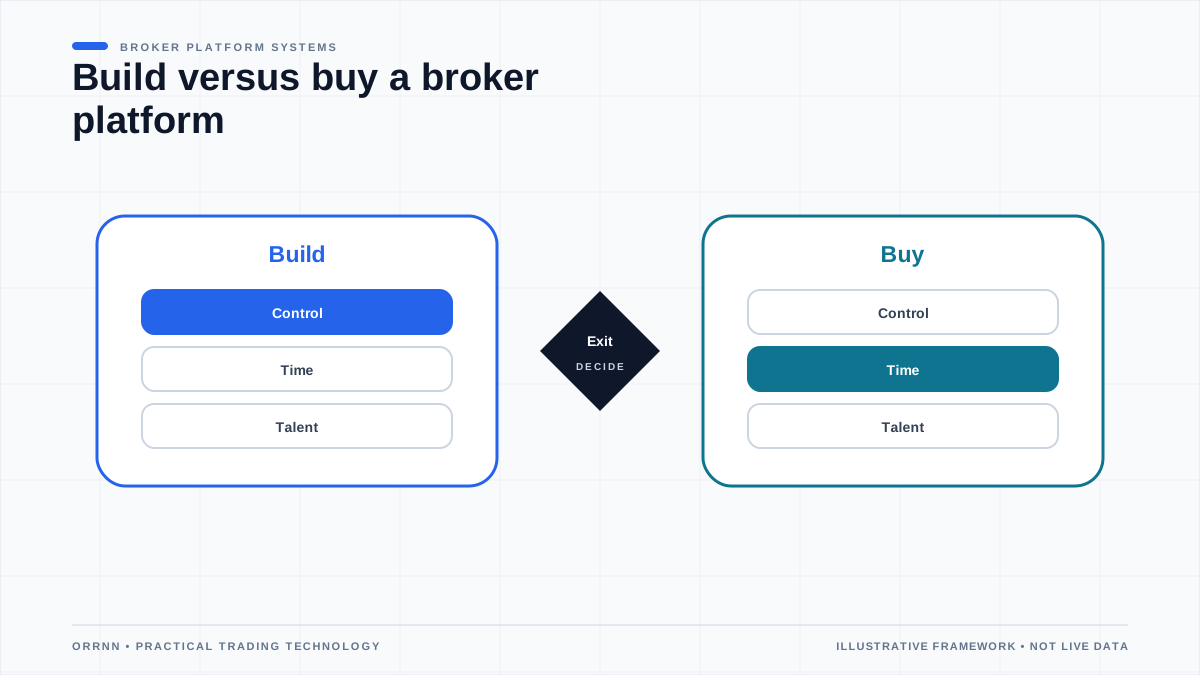 Guide 02
Weigh control, cost, time, and operating responsibility to decide whether to build, buy, white-label, or mix components.
Read guide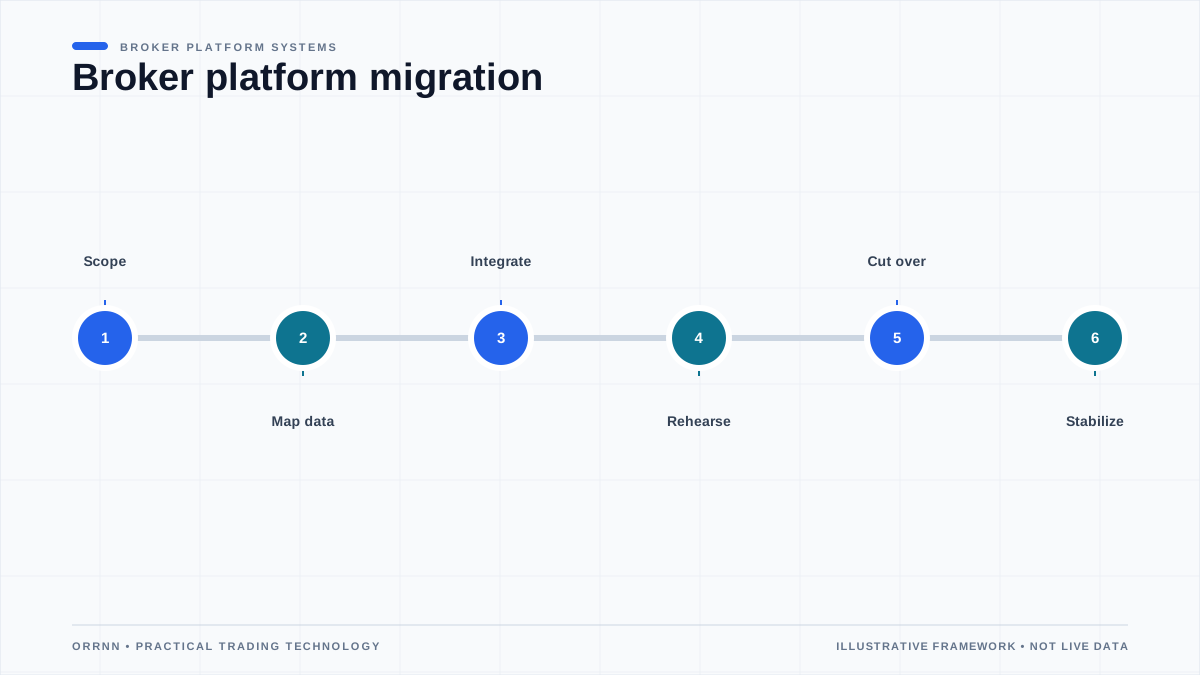 Guide 03
Plan scope, data, integrations, and controls, then rehearse cutover and rollback and stabilize operations afterwards.
Read guide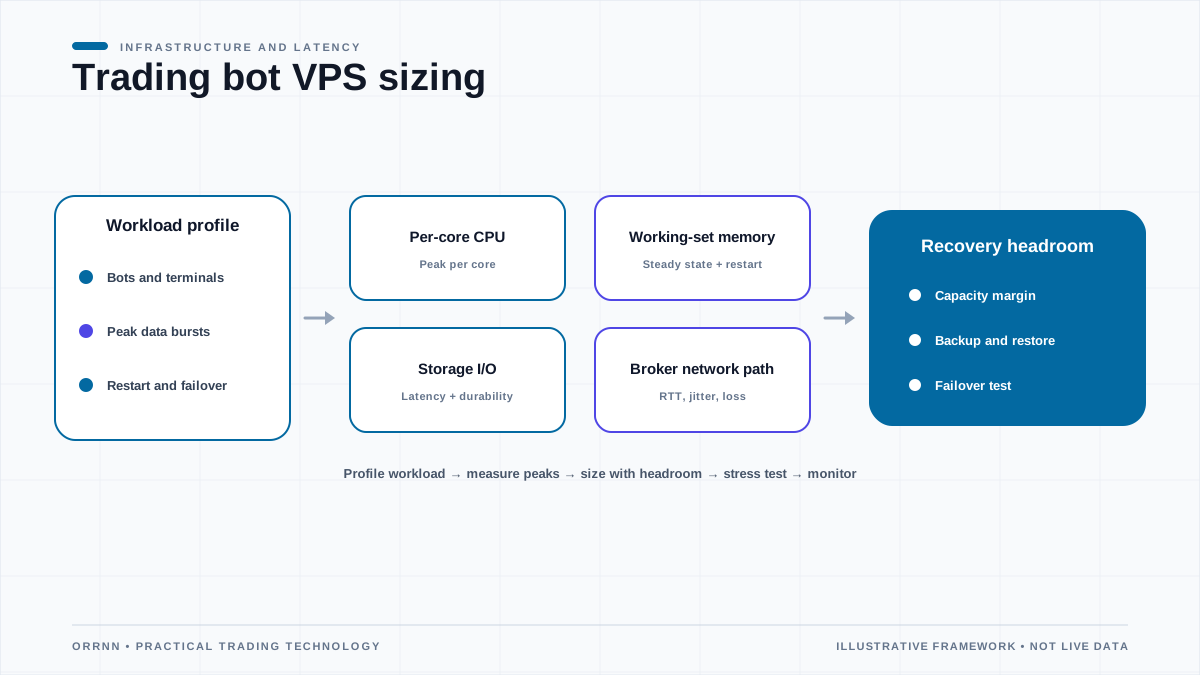 Guide 04
Size a VPS from measured workload and monitoring data instead of generic core, memory, or latency claims.
Read guide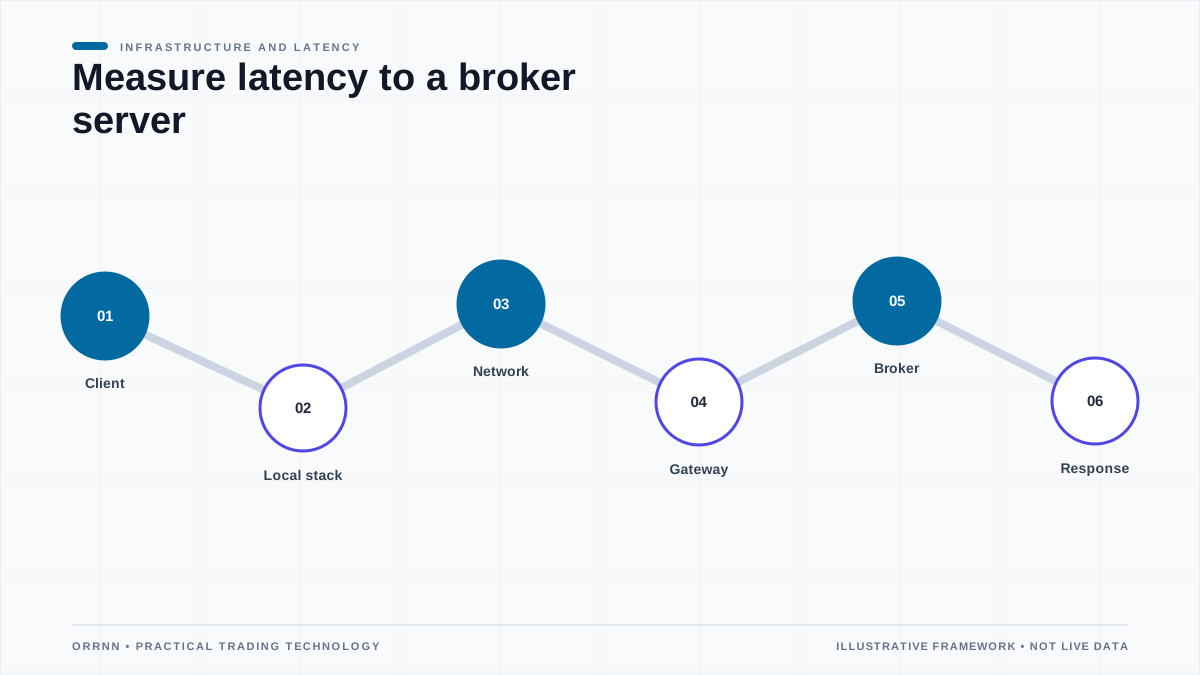 Guide 05
A repeatable method for separating network, connection, API, and order-path delay, and for reporting results without overstating them.
Read guideGuide 06Compare session model, market data, order entry, and recovery to see where each protocol fits.
Read guide Guide 07
Understand the OMS, EMS, risk, market data, and FIX layers, and how an institutional platform differs from a retail one.
Read guide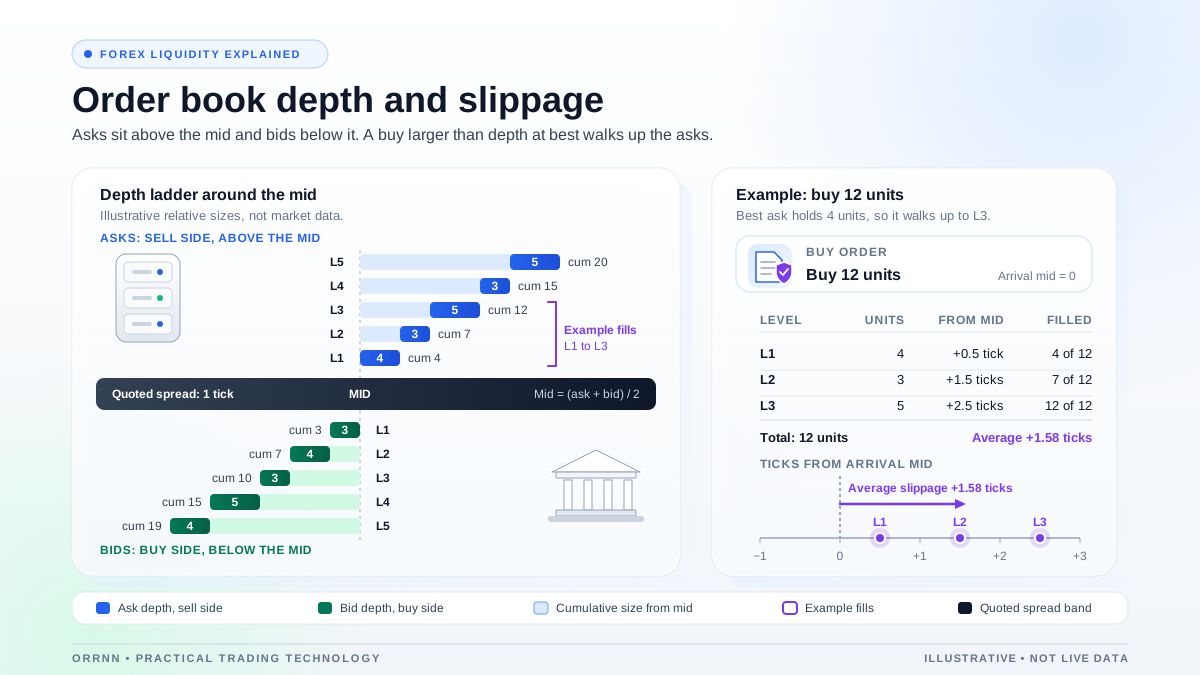 Guide 08
Learn what liquidity means in practice and how spreads, depth, fill rates, and slippage are measured.
Read guide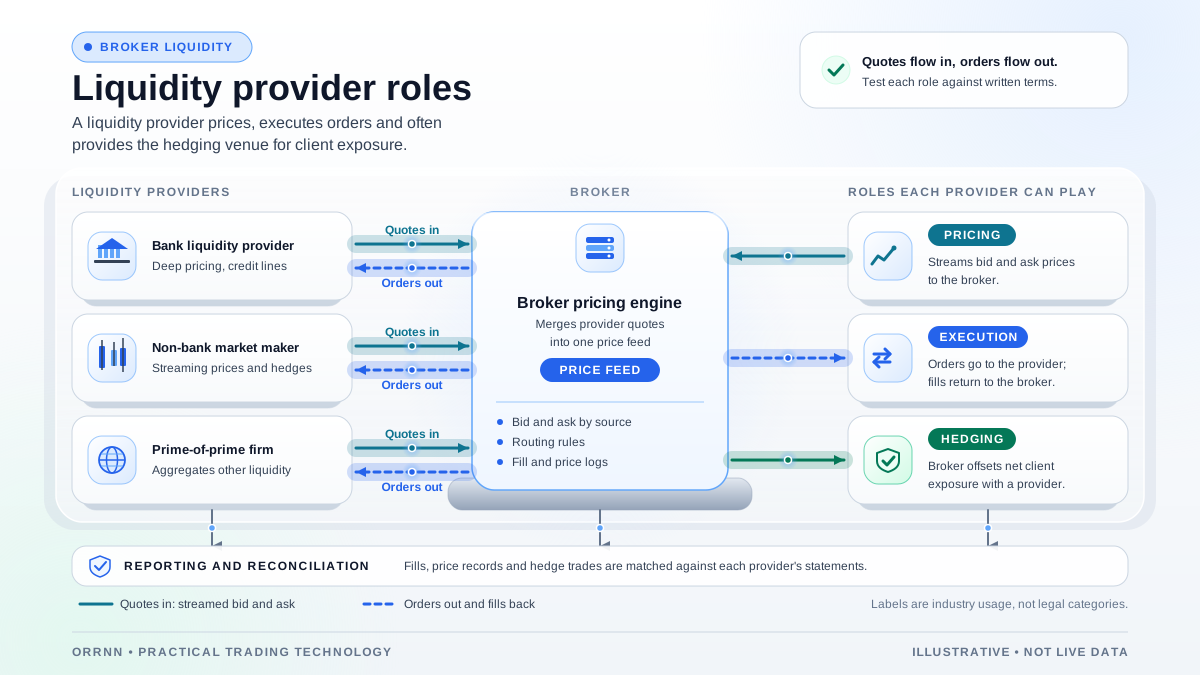 Guide 09
Definitions of pricing, execution, and hedging roles, plus provider types, pricing models, last look, and due-diligence questions.
Read guide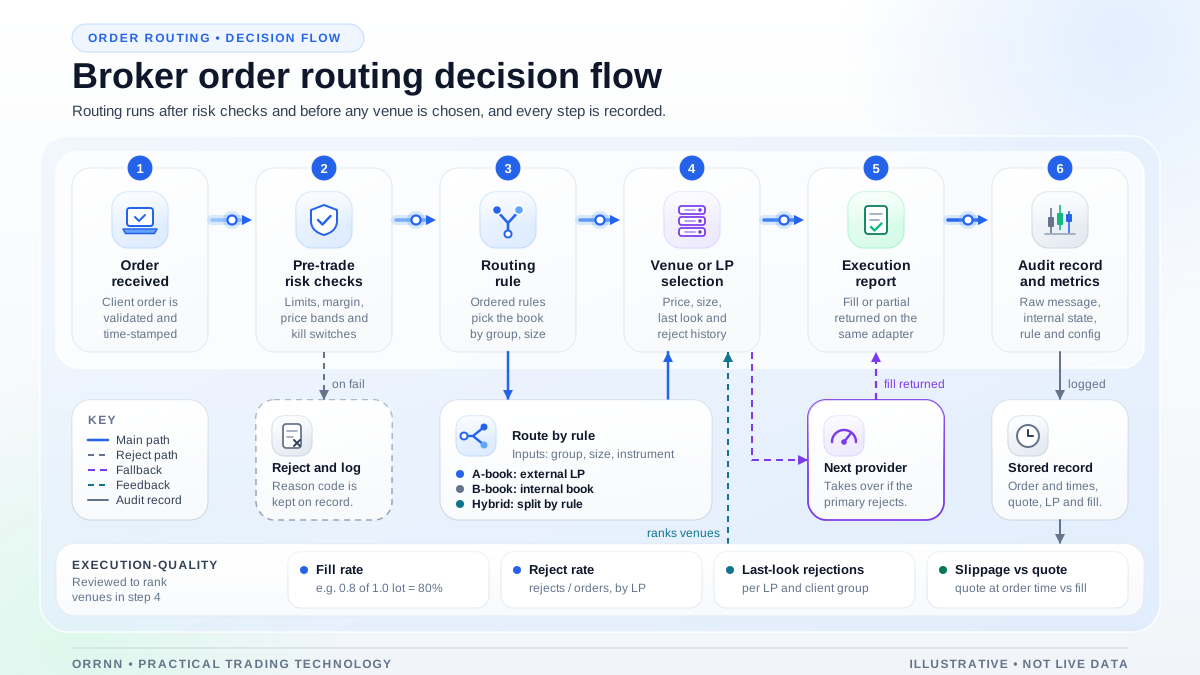 Guide 10
Design routing rules and a router with risk gates and liquidity-provider adapters, then track execution quality and keep audit records.
Read guide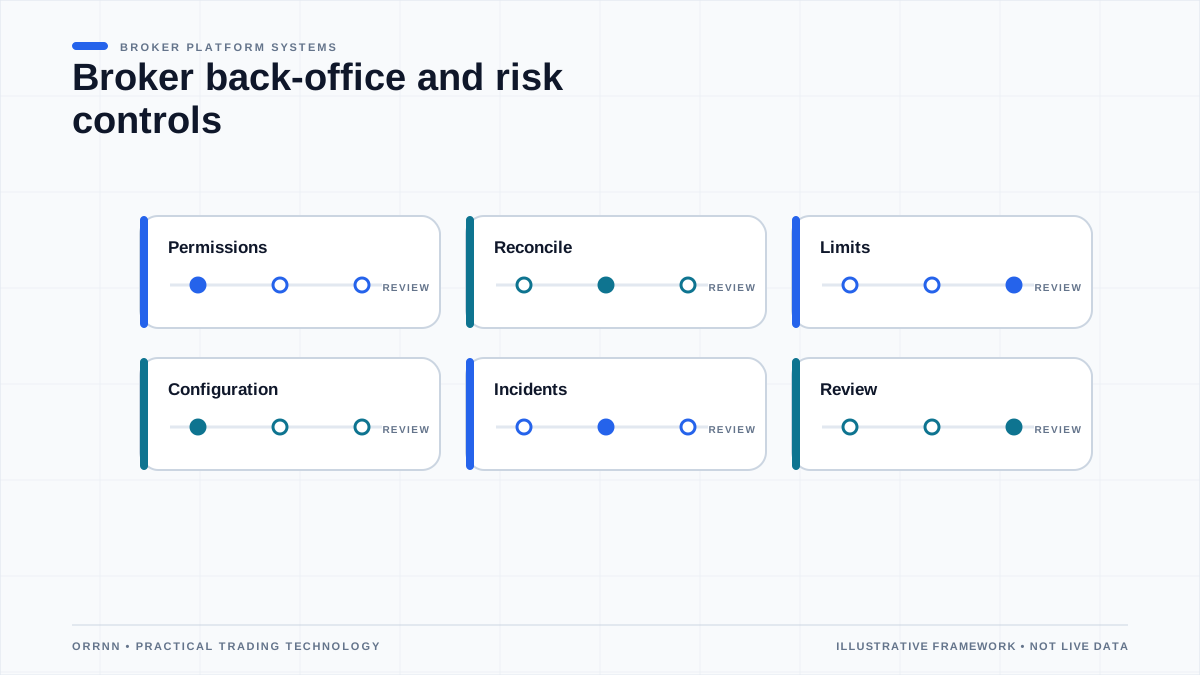 Guide 11
Review controls for access, client data, cash, orders, exposure, configuration, reconciliation, and incidents, and the evidence each one should leave.
Read guide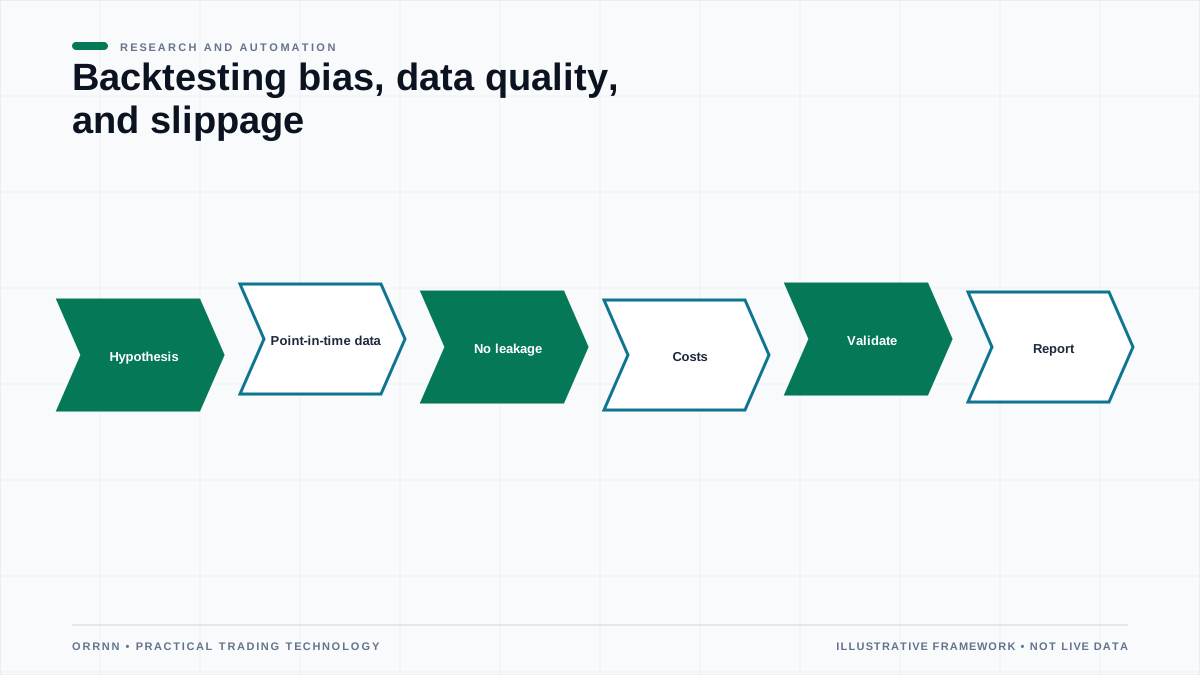 Guide 12
Check point-in-time data, execution assumptions, overfitting, and validation so a backtest report stays honest about its limits.
Read guideThe guides follow Orrnn's editorial policy. In practice, readers should expect the following:
The guides have not been independently certified or externally peer reviewed.
This collection covers technology and technical decisions. For brokerage business decisions, use the dedicated Broker Guides: starting an online brokerage, licensing and regulatory planning, A-book and B-book models, broker CRM requirements, prop firm launch, introducing brokers, platform comparison, and platform pricing.
A collection of educational, vendor-neutral articles that explain trading technology topics and give frameworks for evaluating and planning them.
Broker and prop-firm teams, hedge funds and institutional desks, quantitative researchers, fintech founders, CTOs, infrastructure teams, and procurement or operations managers.
Platform procurement and migration, infrastructure sizing and latency measurement, trading APIs and FIX, institutional platform architecture, liquidity and order routing, broker back-office controls, and backtesting.
These guides focus on technology and technical decisions. Broker Guides focus on brokerage business and operating decisions such as launch planning, licensing, execution models, CRM, and platform pricing.
They are educational. They are not product documentation or a statement of what any product does.
Not necessarily. A guide may discuss controls or technologies that Orrnn does not supply. Confirm product scope in writing, or review the RTX5 Terminal and broker pages for product information.
Check critical facts against primary sources such as vendor documentation, protocol specifications, and regulator publications, and test assumptions in your own environment.
No. They cannot establish compliance, security, suitability, or performance. Take jurisdiction-specific advice from qualified professionals.
Use the APIs, FIX and architecture filter above, or start with WebSocket vs REST vs FIX. Broker Guides also include a FIX version comparison.
Use the contact page. Product scope, integrations, service levels, and commercial terms are subject to written confirmation.