Trade Risk/Reward Ratio Calculator
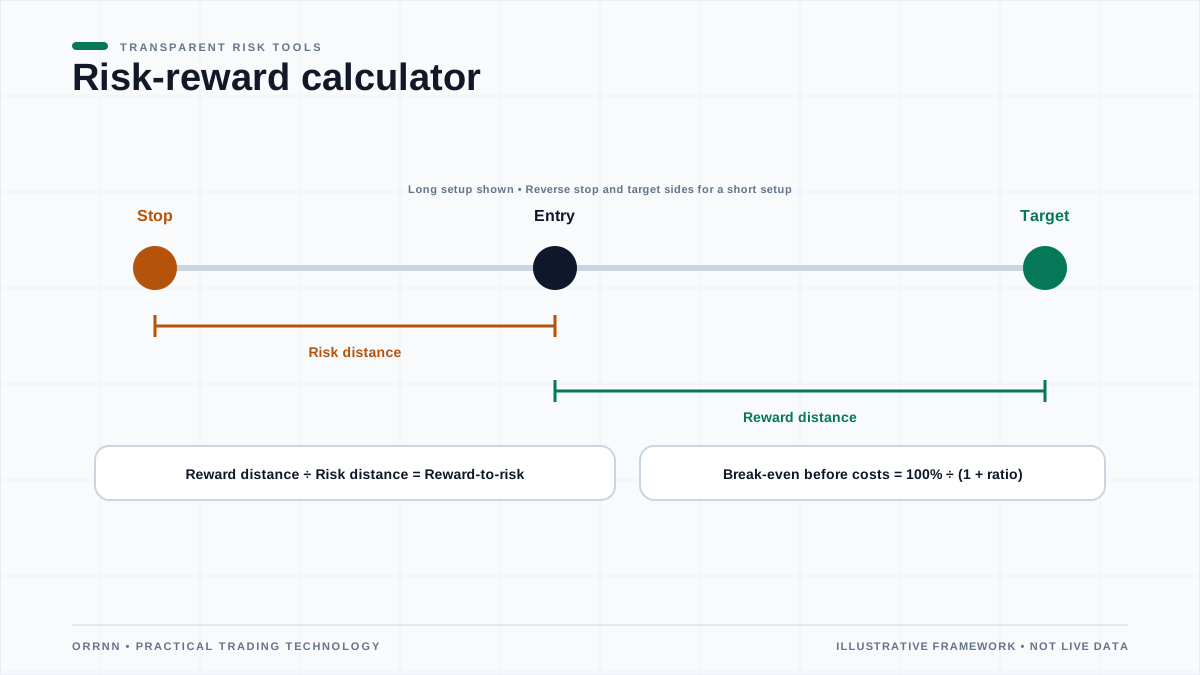
The reward-to-risk ratio compares the distance from entry to a target with the distance from entry to a stop. It is a planning metric, not a probability estimate. A trade with a large theoretical reward can still have a poor expected outcome when its chance of success, costs, or execution quality are weak. Enter prices in the same units and use an account-risk input to keep the ratio separate from position sizing.
Updated September 21, 2026 · Inputs stay in your browser
Educational estimate only. Confirm instrument specifications, live conversion rates, fees, margin rules, and order details with the relevant regulated provider.
Formula and assumptions
For a long setup, the stop should be below entry and the target above it. For a short setup, the stop should be above entry and the target below it. The tool flags price combinations that do not describe either structure. Account cash risk is balance multiplied by risk percentage; position size still requires tick or pip value.
How to use the calculator
- 01Enter the planned entry, protective stop, and target prices.
- 02Confirm that the stop and target sit on opposite sides of entry for the intended direction.
- 03Enter balance and risk percentage to see the separate cash-risk budget.
- 04Test alternative targets or stops only when they remain consistent with the trading thesis and market structure; do not move a stop merely to manufacture a preferred ratio.
How to interpret the result
- A displayed value of 2.00 means the target distance is twice the stop distance; it does not mean the trade is twice as likely to win.
- Break-even win rate before costs can be approximated as 1 ÷ (1 + reward-to-risk). Real break-even rates are higher after costs and imperfect fills.
- The cash-risk output is a budget. Use an instrument-specific position-size calculation to translate that budget into units or contracts.
Worked example
A long setup with entry at 100, stop at 98, and target at 106 has 2 units of price risk and 6 units of theoretical reward, producing a 3.00 reward-to-risk ratio. With a 20,000 balance and 0.5% risk, the cash-risk budget is 100; a separate contract-value calculation is still required.
Limits and risk controls
- The tool does not estimate probability, expected value, correlation with existing positions, gap risk, or portfolio drawdown.
- Stops may fill worse than the trigger price, and targets may not fill at all. Order type, liquidity, volatility, and venue rules matter.
- Historical win rates can be unstable and biased. Test out of sample and include realistic transaction costs before using any systematic threshold.
These tools provide educational estimates, not investment, legal, tax, or risk-management advice. Leveraged products can produce losses greater than the amount initially deposited. Confirm every result with the provider’s live order ticket, contract specification, account agreement, and applicable rules.