Brokerage Technology Architecture and Procurement Guide
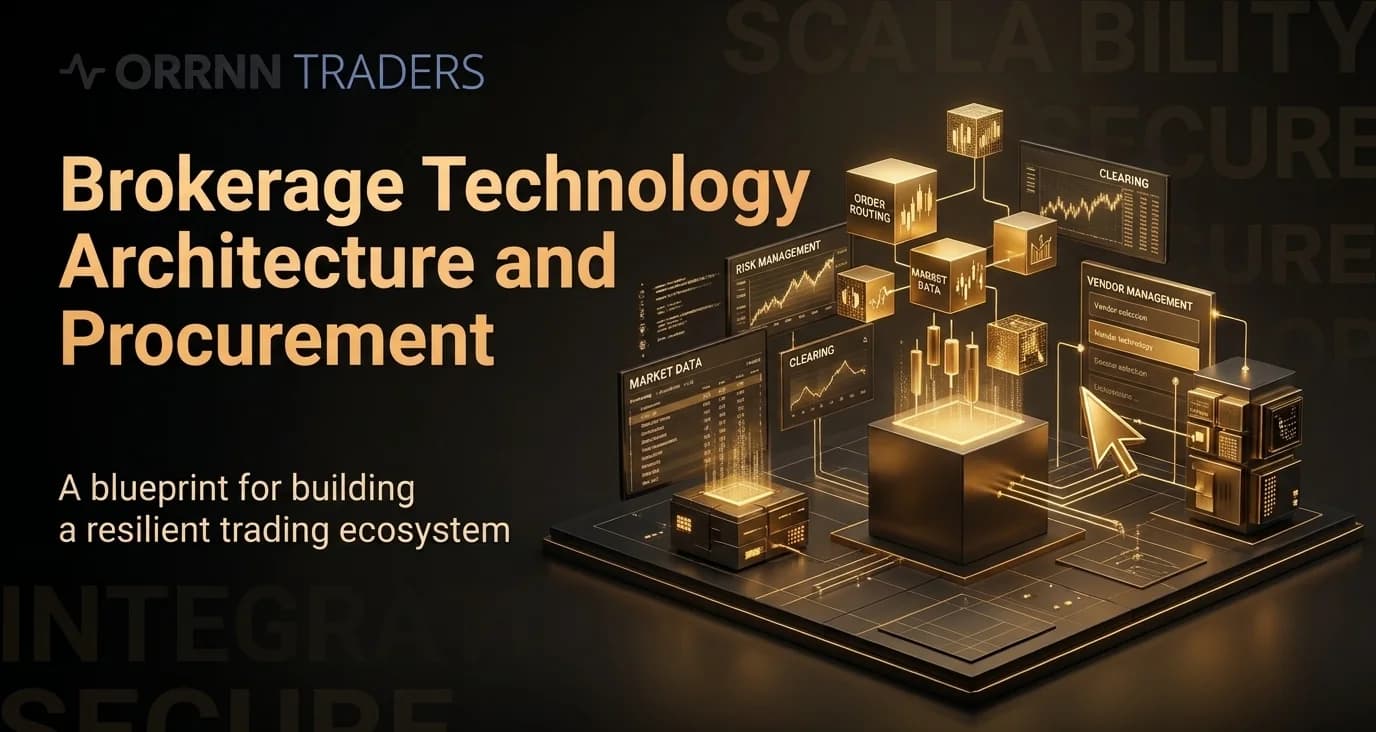
Explore brokerage technology architecture, platform procurement, trading infrastructure, APIs, liquidity, security and vendor evaluation.
The success of a modern brokerage business depends on more than market access and client acquisition. Behind every reliable brokerage operation is a well-designed technology architecture that connects trading platforms, execution engines, liquidity providers, risk management systems, APIs and operational infrastructure.
For brokerage founders and technology decision-makers, choosing the right technology is a strategic investment. Poor architecture decisions can create operational bottlenecks, increase maintenance costs and complicate future expansion.
Understanding brokerage technology architecture and procurement helps businesses evaluate technology providers, establish infrastructure requirements and build a scalable trading environment.
What Is Brokerage Technology Architecture?
Brokerage technology architecture refers to the interconnected software, infrastructure and communication systems that enable a brokerage to manage trading operations.
A typical brokerage technology stack includes:
Trading platform: Provides the interface through which clients access financial markets and manage orders.
Execution engine: Processes, validates and routes trading orders.
Liquidity connectivity: Connects the brokerage with liquidity providers, banks and trading venues.
Risk management systems: Monitor exposure, margin requirements and operational risks.
APIs and integrations: Connect trading platforms with external services and internal systems.
Hosting and infrastructure: Provides the computing, networking, security and redundancy required for continuous operations.
Each component must communicate reliably with the others. A weakness in one layer can affect the overall performance and stability of the brokerage.
Key Components of a Modern Brokerage Technology Stack
1. Trading Platform and Core Execution Engine
The trading platform is the primary interface between clients and brokerage services. However, its underlying execution architecture is equally important.
A professional trading environment should be evaluated for order processing, supported asset classes, execution models, account structures and scalability.
The execution engine handles order validation, processing, routing and execution-related workflows. Depending on the business model, brokers may require market execution, internal matching, hedging or hybrid routing configurations.
Explore Orrnn's brokerage technology and RTX5 architecture to understand its platform licensing and architecture options.
2. Liquidity Connectivity and FIX API Integration
Liquidity connectivity determines how a brokerage accesses external liquidity providers and trading venues.
FIX (Financial Information eXchange) is an important messaging protocol used for communicating financial market information and trading instructions.
When evaluating connectivity, consider:
FIX 4.4 and FIX 5.0 support.
Session management and message reconciliation.
Market data normalization.
Order routing requirements.
Connection redundancy.
Execution monitoring and reporting.
The required configuration depends on the broker's liquidity relationships, execution model and trading volume.
Orrnn's engineering and integration services cover technical architecture, liquidity connectivity and FIX integration planning.
3. Risk Management and Back-Office Infrastructure
Risk management should be integrated into the brokerage architecture rather than treated as a separate operational activity.
Important considerations include margin monitoring, exposure limits, position reconciliation, access permissions and automated risk alerts.
Back-office systems also support administrative workflows, account management and operational reporting.
A properly designed architecture should establish clear responsibilities between trading operations, risk teams, administrators and technology personnel.
4. Hosting, Security and Infrastructure Resilience
Brokerage infrastructure must support predictable performance and operational continuity.
Technology procurement teams should evaluate:
Dedicated hosting and cloud deployment options.
Network connectivity and latency.
Data encryption and access controls.
Backup and disaster recovery procedures.
System monitoring and incident response.
Redundant infrastructure and failover testing.
The correct infrastructure depends on expected workload, geographical requirements, operational risk and budget.
Review Orrnn's engineering roadmap for information about its published engineering release status and infrastructure development priorities.
How to Approach Brokerage Technology Procurement
Brokerage technology procurement is the process of identifying, evaluating, comparing and purchasing the software and infrastructure required to operate a brokerage.
Instead of selecting a vendor based only on pricing or demonstrations, businesses should follow a structured procurement process.
Step 1: Define Business and Technical Requirements
Start by identifying the brokerage's operational model, expected trading volume, target markets, supported instruments and account requirements.
Prepare a requirements document covering platform functionality, execution models, liquidity connectivity, security, hosting and integration requirements.
This document will become the foundation of your vendor evaluation.
Step 2: Evaluate Technology Vendors
Compare potential providers based on their actual technical capabilities and documented deliverables.
Important evaluation criteria include:
Architecture flexibility and scalability.
Platform functionality and integration options.
Security controls and access governance.
Technical support and maintenance arrangements.
Software ownership and data portability.
Request technical documentation, product demonstrations and evidence supporting important performance claims.
Step 3: Compare Pricing and Total Cost of Ownership
Initial licensing costs do not represent the complete cost of operating brokerage technology.
A realistic procurement budget should account for:
| Cost category | What to evaluate |
|---|---|
| Software licensing | Monthly or annual platform fees |
| Integration | APIs, FIX gateways and custom development |
| Infrastructure | Hosting, servers and connectivity |
| Maintenance | Updates, monitoring and support |
| Security | Audits, backups and protection controls |
| Migration | Data transfer and implementation |
Evaluating total cost of ownership (TCO) helps businesses understand long-term financial commitments rather than focusing exclusively on initial purchase prices.
Step 4: Conduct Technical Due Diligence
Before signing an agreement, verify the vendor's technical claims.
Request documentation covering architecture diagrams, capacity testing, security procedures, API specifications, backup arrangements and service-level agreements.
Conduct acceptance testing wherever possible. Test system behaviour under realistic workloads, simulated outages and integration scenarios.
Also clarify which capabilities are currently available, which require custom development and which remain on the product roadmap.
Step 5: Review Contracts, SLAs and Exit Planning
Technology procurement should include clear contractual responsibilities.
Review uptime commitments, support response times, maintenance windows, data ownership, software licensing and change-management procedures.
A vendor exit strategy is equally important. Ensure that data can be exported in usable formats and that migration assistance, transition responsibilities and associated costs are documented.
Common Mistakes in Brokerage Technology Procurement
Brokerage businesses can encounter significant challenges when technology decisions are made without sufficient planning.
Some common mistakes include:
Selecting vendors based entirely on low licensing prices.
Ignoring integration requirements.
Underestimating infrastructure and maintenance expenses.
Accepting performance claims without independent validation.
Overlooking cybersecurity and disaster recovery.
Purchasing features that do not support actual business requirements.
Avoiding these mistakes requires coordination between business leadership, engineering teams, compliance professionals and procurement specialists.
How Orrnn Supports Brokerage Technology Architecture
Orrnn focuses on trading technology engineering, platform architecture, execution infrastructure and technical procurement guidance for brokers and professional financial firms.
Its technology offering includes the RTX5 brokerage platform architecture, core execution engineering, connectivity and integration services, and infrastructure planning.
Through its brokerage technology solutions and engineering services, Orrnn supports businesses evaluating platform configurations, technical integrations and deployment requirements.
For technology decision-makers, the Orrnn company profile provides further information about its engineering focus and operating responsibilities. Businesses can also review the trading technology guides and research publications for additional procurement and architecture insights.
The right technology configuration should always be confirmed against the agreed scope, available product capabilities and contractual deliverables.
Conclusion
Brokerage technology architecture and procurement require a long-term approach that balances performance, scalability, security, integration and operational costs.
A structured procurement process helps businesses identify suitable technology providers, validate technical capabilities and reduce the risks associated with infrastructure decisions.
Rather than purchasing individual software components without considering their dependencies, brokerage businesses should evaluate the entire technology ecosystem.
If your organization is planning to build, upgrade or evaluate its brokerage infrastructure, consider discussing your technical requirements with Orrnn's engineering team for an architecture review.