A-Book vs B-Book vs Hybrid Brokerage Models: A Neutral Operating Guide
A neutral explanation of external hedging, internalization, hybrid routing, conflicts, economics, controls, execution evidence, and due-diligence questions.
Direct answer
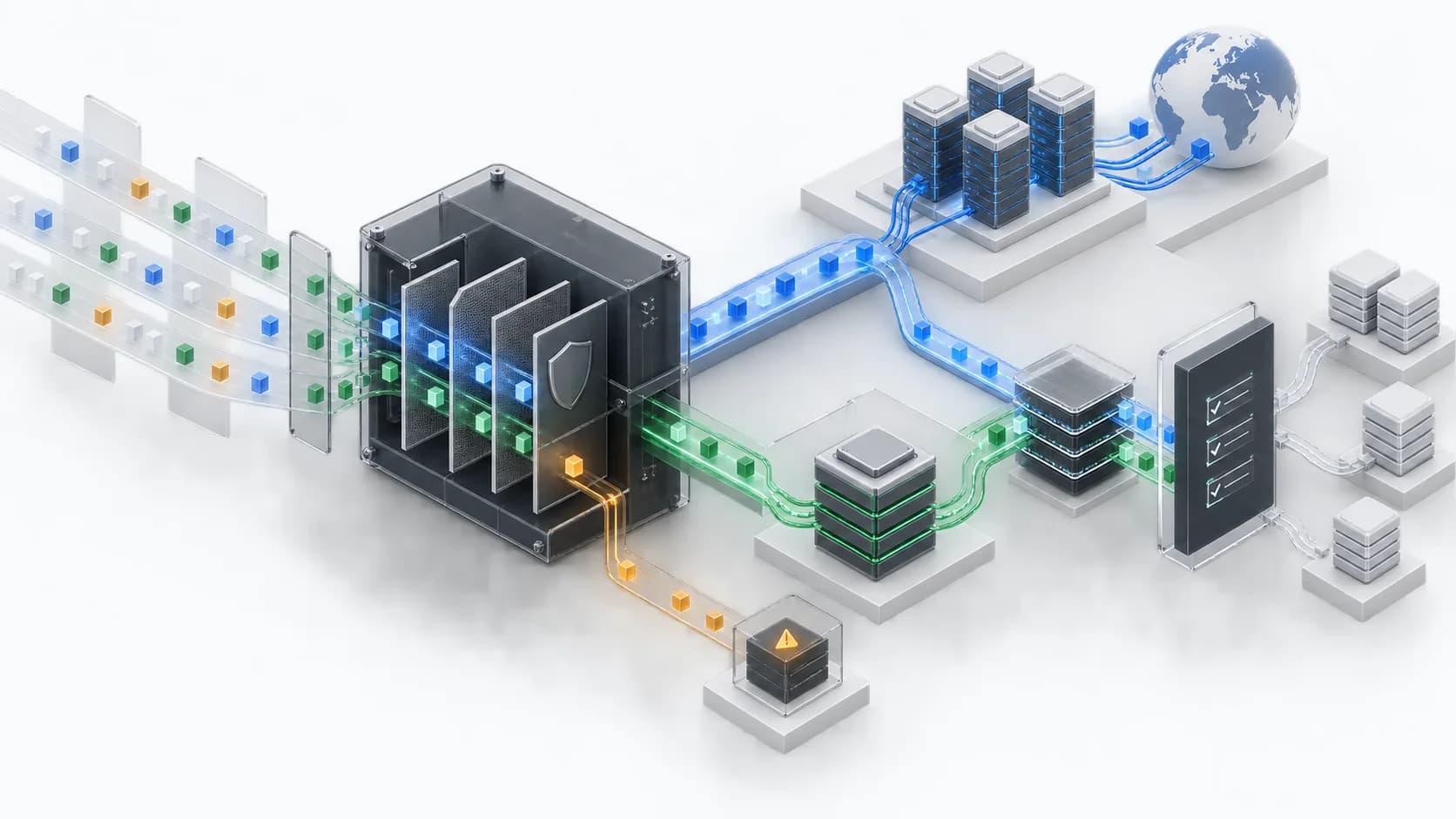
A-book generally describes sending or hedging client risk externally, B-book generally describes internalizing some or all exposure, and hybrid describes using more than one treatment. These labels do not reveal the legal counterparty, exact routing rule, execution quality, price construction, hedge timing, or risk. None is automatically lawful, unlawful, fair, unfair, profitable, or safe. A brokerage must define its actual order and risk flows, comply with the rules and disclosures that apply, manage conflicts, set independent limits, monitor client outcomes, and retain evidence for every routing and intervention decision.
Use the labels as shorthand, not conclusions
Industry participants use A-book to describe arrangements where client flow or resulting exposure is passed to an external liquidity provider or venue. B-book usually refers to a broker retaining or internalizing exposure. Hybrid can mean routing different orders, clients, products, or risk amounts differently, or hedging aggregate exposure after internalization. The terms are not uniform legal definitions and can conceal materially different contracts and technology.
Begin with facts: who is the client's contractual counterparty; whether an order is executed against the broker, agency-routed, or handled under another structure; when and how any hedge occurs; how the client price is formed; what discretion exists; and which entity bears market, credit, operational, and conduct risk. Obtain legal advice for the relevant product, client type, and jurisdiction.
Do not market the label as a guarantee. External routing does not guarantee a fill, a particular spread, no conflict, or good execution. Internalization does not by itself prove manipulation or poor treatment. The assessable questions are whether the model is permitted, accurately disclosed, governed, adequately capitalized, operationally controlled, and producing outcomes consistent with applicable obligations and client agreements.
Map orders, trades, positions, and hedges separately
Draw the client order lifecycle from request through validation, price, acceptance, execution, position, cash posting, correction, and reporting. Then draw the broker's risk lifecycle: exposure creation, aggregation, limit check, hedge decision, external order, execution, residual risk, financing, and reconciliation. A client execution and a broker hedge may be separate events with different timestamps, prices, and counterparties.
Record the identifiers linking client orders, executions, internal positions, hedge baskets, external orders, counterparty executions, and ledger entries. If several client trades produce one hedge, the allocation and performance analysis should remain reproducible. If a hedge is delayed or sized by net exposure, document the approved logic rather than retrospectively describing every client order as directly transmitted.
State the systems of record for client order state, external execution, exposure, limits, and accounting. Reconcile quantities, prices, fees, currencies, financing, and timestamps. Disagreements are expected during timeouts, partial fills, corrections, and disconnections; define uncertainty states and escalation instead of forcing premature closure.
| Topic | Evidence needed | Why it matters |
|---|---|---|
| Legal capacity | Client agreement and legal analysis | Determines rights, disclosures, and applicable duties |
| Price formation | Sources, aggregation, markups, timestamps | Explains the price presented and executed |
| Routing | Versioned rule, inputs, outcome, override | Shows how discretion and automation operate |
| Hedging | Exposure policy, limits, hedge records | Separates client execution from risk transfer |
| Conflicts | Governance, remuneration, monitoring | Tests whether incentives can harm client outcomes |
| Execution quality | Order-level and aggregate measurements | Replaces marketing claims with outcomes |
Understand economics without reducing the model to spreads
Revenue and risk can include spread or markup, commissions, financing, conversion, platform or data fees, partner remuneration, external execution cost, market movement on retained exposure, hedging slippage, rejected hedges, credit exposure, and operational losses. Model gross and net economics by product and scenario. Do not describe client losses as predictable brokerage profit; exposure, withdrawal, hedging, conduct, concentration, and reputation make outcomes uncertain.
Externalization introduces counterparty spreads, commissions, financing, minimums, margin, credit, market-data, connectivity, and operational cost. Internalization can reduce some external costs but increases retained market and concentration risk and can amplify conflicts. Hybrid models add routing and surveillance complexity. Compare capital usage, liquidity under stress, and downside, not only expected unit margin.
Build severe-but-plausible scenarios: one-way client exposure, gap moves, correlated instruments, stale prices, counterparty failure, rejected hedges, widened spreads, market closure, deposit or withdrawal stress, fraud, system outage, and manual dealing error. Include the timing of collateral calls and cash settlement. Board-approved appetite should translate into pre-trade and intraday limits that the technology can enforce.
Govern routing, dealing, and conflicts
Routing rules should use permitted, documented inputs and produce an auditable outcome. Define client or account grouping, product, size, exposure, counterparty availability, cost, market state, limits, fallback, rejection, and override. Review whether grouping could create unfair or discriminatory outcomes. Store rule versions and reconstruct the decision for a historical order.
Separate commercial targets from control decisions. Dealer remuneration should not encourage harmful rejections, delay, price asymmetry, or selective treatment. Establish independent compliance and risk oversight, access segregation, change approval, surveillance, exception reports, and escalation. Manual intervention should require a reason and produce a record, not disappear into an administrator log.
Conflict disclosures must be specific enough for the applicable regime and actual model, but disclosure alone may not cure a conflict. Legal advisers should assess governance, consent, best-execution or fair-dealing duties, product rules, and prohibited practices. Technology teams should implement the approved policy; they should not invent it through defaults.
Measure execution outcomes across comparable groups
Capture request, quote, acceptance, routing, acknowledgement, execution, rejection, cancellation, and client-notification timestamps with known clock quality. Retain available market context, requested and executed quantity, price, slippage, partial fills, reason codes, and counterparty. Define how requotes, last look where applicable, price improvement, and asymmetric slippage are represented.
Analyze distributions rather than one average. Segment by product, order type, side, size, session, volatility, client group, route, counterparty, device or region where relevant. Review rejection, timeout, fill rate, partial fill, latency, realized spread, and price comparison using a defensible benchmark. Small samples and market differences can mislead, so state methodology and confidence limitations.
Connect execution monitoring to complaints and incidents. A cluster of adverse outcomes may result from a mapping defect, stale source, capacity problem, counterparty behavior, routing rule, or market conditions. Investigation should preserve raw data and trace configuration changes. Correct affected records and client outcomes under an approved process where required, then verify that the root cause is removed.
Design technology and operations for uncertainty
Order and hedge workflows must handle duplicates, late messages, sequence gaps, partial fills, contradictory states, and reconnects. Maintain distinct client and external order state machines linked by stable identifiers. Do not assume a timeout means no execution. Queue uncertain cases, limit further risk if necessary, and reconcile with independent records or counterparty confirmation.
Price and routing services need stale-data checks, source health, approved markups, permissions, version control, alerts, and safe degradation. Exposure calculations require complete and timely positions, currency conversion, contract specifications, and pending orders. Validate boundaries and concurrent events. A risk dashboard that depends on the same failed feed cannot provide independent assurance.
Operational runbooks should cover counterparty outage, bridge failure, platform disconnection, fast market, instrument suspension, erroneous price, limit breach, manual hedge, correction, and end-of-day break. Name decision authority and client-communication responsibilities. Rehearse scenarios using realistic records and verify accounting after recovery.
Decision checklist
- Legal capacity, products, clients, entities, and disclosures match the actual flow
- Client executions and brokerage hedges are represented as distinct events
- Risk appetite translates into enforced exposure, credit, and concentration limits
- Routing and intervention rules are versioned, approved, monitored, and reconstructable
- Conflicts and remuneration receive independent compliance and board oversight
- Execution monitoring uses order-level evidence and comparable cohorts
- Counterparty, order, position, cash, and fee records reconcile
- Stress, outage, error, and uncertain-order procedures have been exercised
Evaluate vendors without outsourcing the model
A trading platform, bridge, risk engine, or liquidity provider may support several models, but a capability does not approve its use. Require documentation of price, order, routing, risk, audit, and reporting behavior. Demonstrate representative flows and negative cases. Identify which decisions remain with the brokerage and which service provider personnel can change configuration or intervene.
Do not accept claims such as "pure A-book," "conflict free," "no dealing desk," or "best price" without definitions and evidence. Ask whether the statement describes the client contract, each order, net exposure, a default configuration, or a marketing category. Obtain independent legal review and verify outcomes from production-quality data.
RTX5 publishes bridge and FIX commercial options, but a price-list inclusion does not specify an execution policy. Ask the demonstration to trace a proposed A-book, B-book or hybrid rule through price formation, order routing, exposure updates and audit logs. Validate the intended configuration and each counterparty adapter, then record the supported model and responsibilities in the contract.
Primary sources and evidence boundary
Sources are listed to support specific definitions, public vendor statements, and regulatory frameworks. They do not endorse Orrnn, prove that a product meets a requirement, or replace a current proposal, contract, legal opinion, technical test, or regulator decision.
The original source review was completed on 21 September 2026. RTX5 pricing and plan references were updated on 26 September 2026; the dated note below identifies that product source. Recheck time-sensitive requirements and commercial terms before relying on them.
- RTX5 broker pricing and plan inclusions
RTX5 / Orrnn
Product pricing reviewed 26 September 2026. Vendor-published commercial scope, not independent proof of performance, compatibility or regulatory approval. Inclusions vary by plan.
- Markets in Financial Instruments Directive (MiFID II)
EUR-Lex
Official EU directive text; national implementation and the firm's facts determine applicability.
- MiFID II
European Securities and Markets Authority
Official ESMA materials for the EU regime, including conduct and execution-related rules where in scope.
- FIX Protocol
FIX Trading Community
Primary technical source for standardized trading messages; it does not define a brokerage's legal model or guarantee interoperability.
- Intermediary Registration
Commodity Futures Trading Commission
Official U.S. intermediary overview illustrating why activities and products, not marketing labels, drive analysis.
Related reading and next steps
Liquidity bridge evaluation
Translate the approved execution model into routing, protocol, test, and reconciliation requirements.
ReadBroker licensing plan
Assess legal roles and permissions before choosing a risk label or technology.
ReadBroker technology stack
Map execution services to records, controls, security, resilience, and ownership.
ReadYour next step
Explore an RTX5 configuration for your business.
Compare the published platform plans, then share the account capacity, client workflows and connectivity your business needs. A requirements discussion can establish the demonstration scope, quote and implementation dependencies. Module inclusions vary by plan.