Liquidity Bridge Evaluation: Routing, Risk, and Due-Diligence Guide
A broker-focused framework for evaluating liquidity connectivity, aggregation, routing, reconciliation, resilience, implementation, and commercial scope.
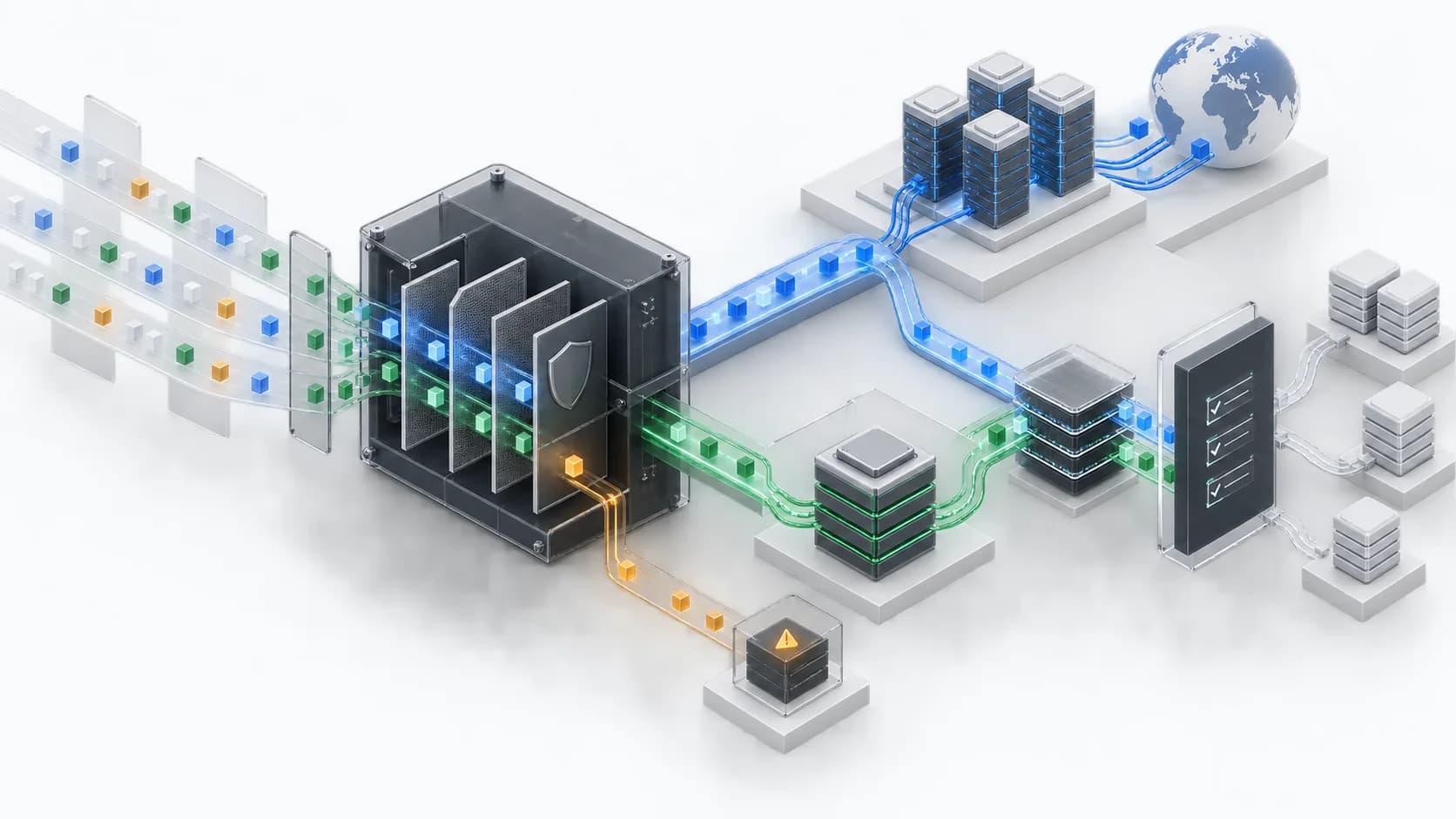
Direct answer
Evaluate a liquidity bridge by documenting the instruments, price sources, counterparties, execution model, account mappings, routing rules, message lifecycle, risk controls, reporting, reconciliation, resilience, and support required by your brokerage. A bridge does not create liquidity and does not guarantee best execution, low latency, fills, or regulatory compliance. Test it with representative flows and failures against each counterparty's actual protocol or FIX rules of engagement. Require written scope for adapters, hosting, market data, risk tools, environments, certification, support, fees, data ownership, and exit.
Define the bridge's job in the operating model
Start with the business flow rather than a latency claim. A bridge may receive prices, normalize symbols, aggregate books, apply markups, publish prices to a trading platform, receive orders, apply risk or routing logic, send messages to counterparties, process executions, and feed reporting. Another deployment may perform only connectivity. List every required function and identify whether it belongs in the bridge, trading server, separate risk engine, liquidity provider, or brokerage procedure.
Document products, venues, account types, legal entities, client classifications, expected concurrency, order and quote rates, peak scenarios, sessions, currencies, and geographic deployment. Define which flows are matched externally, internalized, manually handled, or rejected. Have compliance and counsel review how execution arrangements, conflicts, disclosures, and client outcomes apply; a technical diagram does not decide the legal characterization.
Identify each system of record. The trading platform, bridge, counterparty, and ledger can disagree about order state, execution, position, price, fee, or timestamp. Define authoritative records for each purpose, cross-system identifiers, reconciliation frequency, tolerances, corrections, and escalation. The architecture is incomplete until operations can explain and resolve a break without editing databases or relying on a vendor's informal message.
Evaluate market-data construction separately from execution
List every price source, data right, instrument mapping, precision, trading session, time zone, subscription, depth level, and redistribution condition. Establish how quotes are normalized, filtered, timestamped, aggregated, marked up, and published. Ask how the system identifies stale, crossed, inverted, outlier, duplicate, or missing data and what safe behavior follows. A displayed quote can remain technically available while being economically unusable.
Define aggregation rules in measurable terms. If a consolidated book is required, specify price-time or other priority, depth construction, minimum quantity, source eligibility, locked or crossed handling, quote lifetime, and whether indicative and executable prices are distinguished. Record what information dealers and surveillance teams can retrieve afterward. A diagram labelled "smart aggregation" does not explain reproducible behavior.
Keep data and execution entitlements explicit. Permission to receive prices does not necessarily permit display, derived data, storage, or redistribution to all clients and territories. Market-data agreements and exchange rules can affect architecture and cost. Require the vendor and brokerage to identify contractual owners and technical controls, while qualified counsel reviews the rights for the intended use.
Specify the complete order and execution lifecycle
Write state diagrams for market, limit, stop, stop-limit, and other approved order types. Cover validation, acknowledgement, routing, pending status, partial fill, full fill, rejection, cancellation, replacement, expiry, disconnection, correction, and bust where applicable. Define client and counterparty identifiers, allowed transitions, timeout behavior, and how late or contradictory events are handled. Include position and ledger effects at each stage.
For every liquidity connection, obtain its protocol specification or FIX rules of engagement. Record application and session versions, message types, mandatory and optional fields, symbol identifiers, quantities, prices, time-in-force, execution instructions, custom tags, throttles, sequence and resend policy, sessions, certificates, test environments, and certification. FIX compatibility is bilateral; the word FIX does not make two systems plug-and-play.
Test duplicate, delayed, out-of-order, and lost events. Network recovery can replay messages, while a timeout can occur after a counterparty accepted an order. The design must avoid double execution and retain uncertainty for investigation rather than inventing a final state. Match drop-copy or independent records where available and surface gaps immediately to operations.
| Scenario | Expected control | Evidence |
|---|---|---|
| Price source goes stale | Source is excluded or safely degraded under an approved rule | Alert, decision trace, client output |
| Order timeout after send | State remains controlled until counterparty status is reconciled | Message log and operator workflow |
| Partial fill then disconnect | Filled quantity is preserved and remainder follows defined recovery | Order, execution, position, and ledger trace |
| Sequence gap | Session recovery follows bilateral rules without silent loss | Session log and gap-resolution record |
| Symbol mapping error | Pre-trade validation prevents or contains the mismatch | Rejected test and mapping approval |
| Primary region unavailable | Failover meets stated data-loss and service objectives | Exercise result and reconciled recovery |
Turn routing and risk language into versioned rules
Define inputs available to routing: legal entity, client group, account, instrument, side, size, exposure, counterparty status, price, depth, cost, capacity, session, and approved restrictions. Define the decision, priority, fallback, rejection, override, and audit fields. If rules change, store the version, approver, reason, effective time, tested cases, and rollback. Reconstruct which rule handled any historical order.
Separate pre-trade limits from dealing strategy. Credit, margin, order-size, price-band, frequency, and fat-finger controls may protect clients, the brokerage, or a counterparty. Exposure thresholds, auto-hedging, and internalization rules express risk appetite. Document ownership and independence so commercial operators cannot quietly bypass protective controls. Test boundaries, concurrent orders, currency conversion, and stale inputs.
Assess conflicts and client outcomes with compliance, not merely technical teams. A-book, B-book, and hybrid are industry descriptions, not complete policies. The brokerage should understand how price formation, markups, routing discretion, rejections, asymmetric treatment, slippage, hedging, and incentives interact with its contracts and obligations. Monitoring should compare disclosed behavior with actual outcomes across meaningful client and order groups.
Measure performance without accepting headline latency
Define timestamps and clocks before defining a threshold. Measure client receipt, platform receipt, bridge receipt, decision, counterparty send, acknowledgement, execution, bridge receipt, platform update, and client notification where available. Synchronize clocks, quantify error, and preserve raw events. An average measured inside one component cannot establish end-to-end execution speed or client experience.
Report distributions under representative load: median, high percentiles, timeout, rejection, partial fill, slippage, and recovery—not a single best result. Segment by instrument, session, counterparty, order type, size, region, and market condition. Separate network transit, queueing, application processing, and counterparty time where evidence permits. State the test topology and whether measurements come from demonstration, staging, or production.
Set capacity criteria for normal, planned peak, and stress conditions. Include price updates, order messages, session reconnects, reports, monitoring, and reconciliation, because non-trading workloads can compete for resources. Test backpressure and graceful degradation. A system that remains online while dropping data or building an unbounded queue has not passed resilience.
Review resilience, support, security, and change control
Map single points of failure across regions, networks, DNS, certificates, credentials, bridge instances, trading servers, databases, message stores, time sources, monitoring, and counterparties. Obtain recovery objectives and assumptions per service. Exercise process failure, network partition, data corruption, region loss, credential expiry, and restoration. Confirm who authorizes failover and how orders in uncertain state are reconciled.
Ask for the security responsibility matrix, administrative-access controls, encryption boundaries, key and certificate lifecycle, logging, vulnerability management, secure development, incident notification, backup, and supplier dependencies. Connectivity often requires sensitive credentials and allowlists; ownership of issuance, rotation, emergency revocation, and audit must be explicit. Review evidence with qualified security staff.
Define release notice, compatibility, test windows, rollback, emergency change, and counterparty certification. A bridge change can affect message semantics without a visible user-interface change. Maintain regression packs for mappings, order states, routing, prices, risk, reports, and reconciliation. Production changes should have approval, staged exposure, monitoring, and a reversible plan.
Decision checklist
- Products, counterparties, sessions, expected flow, and legal entities are defined
- Market-data rights, mappings, aggregation, markups, and stale-price rules are documented
- Every order type has an end-to-end state model and bilateral certification cases
- Routing, risk, overrides, and changes are versioned and reconstructable
- Performance evidence uses distributions, synchronized timestamps, and realistic load
- Counterparty, platform, bridge, position, and cash records are reconciled
- Failover, message recovery, security, support, and change processes are exercised
- Contracted scope covers adapters, environments, hosting, data, support, pricing, and exit
Normalize commercial scope and avoid bundle assumptions
Price the complete service: onboarding and certification, connectors, symbols, counterparties, environments, instances, regions, hosting, data, message or volume units, risk modules, reporting, monitoring, support, professional services, custom rules, upgrades, and termination. Model low, expected, peak, and migration scenarios. State third-party fees and minimum commitments separately. No generic monthly comparison is reliable without matched scope.
Contract for documentation, data ownership, audit cooperation, service levels, incident notification, maintenance, security, business continuity, change, subcontractors, portability, and termination assistance. Define acceptance tests and remedies for material failures. Service credits may be part of the agreement, but they do not replace architecture and controls that protect orders, balances, and clients.
RTX5 lists a bridge/gateway option on Entry and included bridge/gateway scope on Standard. The pricing source is linked below. Define adapters, routing, instruments, environments and failover in the quote, and validate counterparty sessions before launch. Bridge licensing is not a liquidity-provider contract, counterparty certification or a promise that an independent provider will onboard a brokerage.
Primary sources and evidence boundary
Sources are listed to support specific definitions, public vendor statements, and regulatory frameworks. They do not endorse Orrnn, prove that a product meets a requirement, or replace a current proposal, contract, legal opinion, technical test, or regulator decision.
The original source review was completed on 21 September 2026. RTX5 pricing and plan references were updated on 26 September 2026; the dated note below identifies that product source. Recheck time-sensitive requirements and commercial terms before relying on them.
- RTX5 broker pricing and plan inclusions
RTX5 / Orrnn
Product pricing reviewed 26 September 2026. Vendor-published commercial scope, not independent proof of performance, compatibility or regulatory approval. Inclusions vary by plan.
- FIX Protocol
FIX Trading Community
Primary standards source; implementers still need counterparty-specific rules of engagement and certification.
- Supported Versions of the FIX Protocol
FIX Trading Community
Official explanation of supported legacy versions and FIX Latest as of 2026.
- MiFID II
European Securities and Markets Authority
Official entry point for EU MiFID II materials; applicability and execution obligations require qualified review.
- The NIST Cybersecurity Framework 2.0
National Institute of Standards and Technology
General risk-governance guidance relevant to the connectivity service and its supply chain.
Related reading and next steps
Your next step
Explore an RTX5 configuration for your business.
Compare the published platform plans, then share the account capacity, client workflows and connectivity your business needs. A requirements discussion can establish the demonstration scope, quote and implementation dependencies. Module inclusions vary by plan.