MetaTrader 5 Alternatives for Brokers: An Evidence-Led Shortlisting Guide
A neutral framework for brokers considering cTrader, Match-Trader, TradeLocker, DXtrade, RTX5, a custom platform, or a multi-platform strategy alongside or instead of MetaTrader 5.
Direct answer
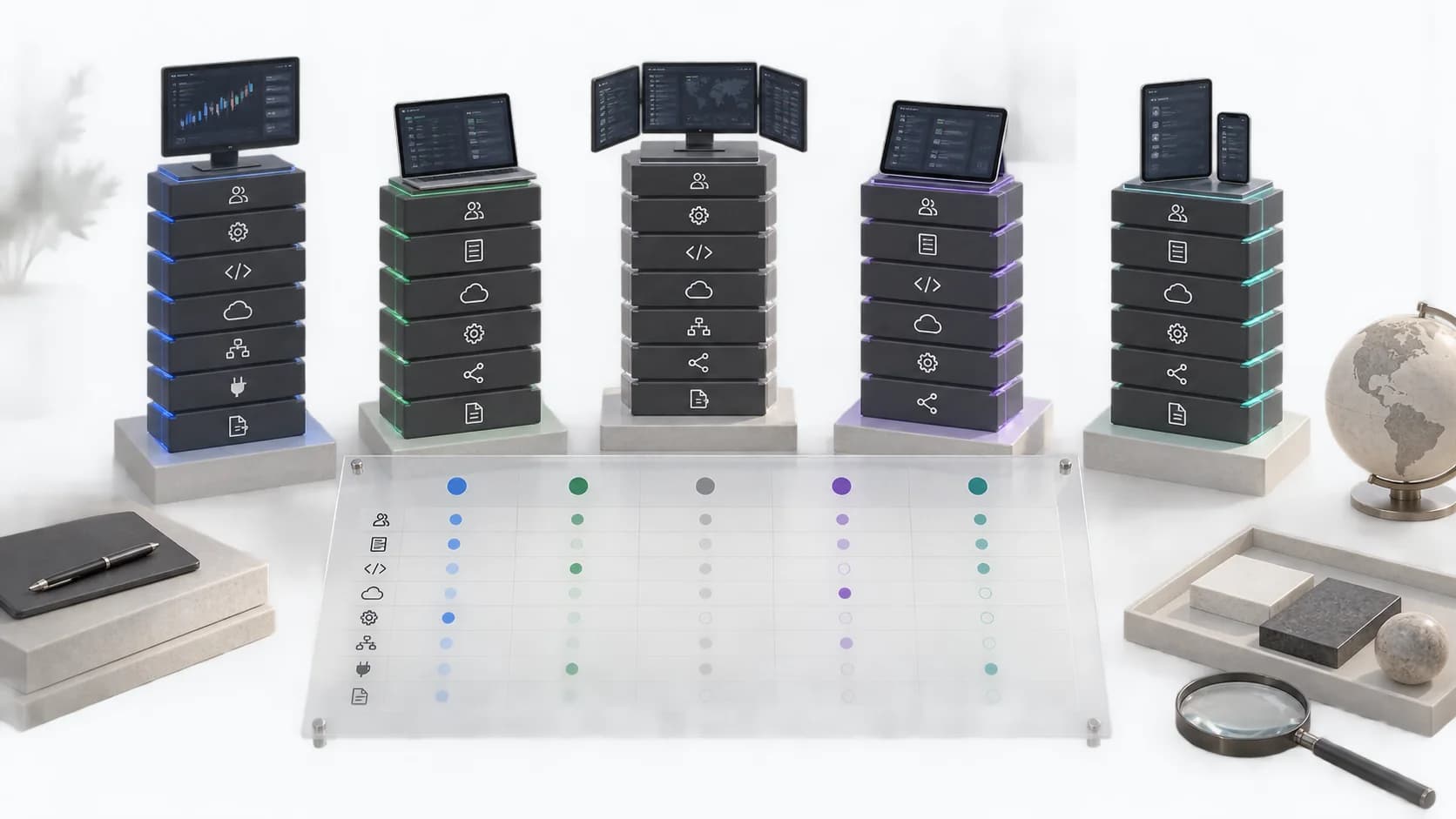
The best MetaTrader 5 alternative is the platform that meets your verified operating, regulatory, product, client, execution, integration, security, support, cost, and exit requirements. cTrader, Match-Trader, TradeLocker, and DXtrade have official vendor material that can inform a shortlist, but none should be treated as a drop-in equivalent. RTX5 publishes broker licensing options that can inform a comparison; validate the required configuration, integrations and client builds separately. Do not base a decision on an unverified claim that MT5 costs a particular amount; request current written proposals with identical scope from every candidate.
Apply this guide to RTX5
Compare RTX5 with your current platform requirements
Bring the workflows and integrations that must survive a platform change. Request an RTX5 demonstration against that list and compare equivalent licence, migration and support costs.
Define why an alternative is being considered
Write the decision trigger in measurable terms. It may involve product coverage, client experience, mobile or web strategy, regional delivery, deployment model, operations, APIs, integrations, resilience, supplier concentration, support, cost structure, customization, or exit rights. "Modern" and "cheaper" are not requirements. Connect each concern to evidence from the current environment and an acceptance criterion for candidates.
Distinguish replacing MT5, adding a second platform, launching a new brand, or building a shared back end with several front ends. Each creates different migration, liquidity, account, data, support, reconciliation, and regulatory work. A multi-platform strategy can reduce dependence and address client segments, but it can also duplicate operations and fragment records.
Document what works today and should not be lost. Inventory instruments, order types, account models, client devices, automation, partner workflows, reports, administrator tools, dealer controls, APIs, liquidity connections, historical data, statements, and support processes. An alternative should be measured against real use, not a generic feature list.
Use official vendor pages as discovery sources
MetaQuotes publicly describes MT5 for brokers as a multi-asset platform with back-end controls, APIs, gateways, and broker-controlled server deployment. That vendor description establishes a reference set of questions, not independent proof of a particular broker's implementation. Request the exact components, licence, architecture, and responsibilities in the current proposal.
Official pages position the alternatives differently. cTrader describes a technology platform and broker ecosystem while disclaiming responsibility for independent brokers. Match-Trader describes standalone and broader-stack configurations, including vendor-described CRM or API options. TradeLocker markets a white-label, chart-centered platform. Devexperts describes DXtrade for FX and CFD brokers as hosted and configurable. Product names and packages can change, so use dated material.
Do not infer missing functions from marketing language. A trader front end is not automatically an account service, ledger, CRM, KYC system, payment processor, bridge, liquidity service, reporting engine, or regulatory solution. Even when a vendor describes a broader suite, determine whether the required module is included, separately contracted, third-party, limited by region, or subject to integration.
| Candidate | Official-material starting point | Decisive follow-up |
|---|---|---|
| MetaTrader 5 | Broker platform, APIs, gateways, and broker-managed infrastructure | Which edition, components, deployment, integrations, and costs are proposed? |
| cTrader | Trading-platform ecosystem delivered through participating firms | Which broker-side services, deployment, APIs, risk, and support are in scope? |
| Match-Trader | Standalone or suite configuration with vendor-described CRM/API choices | Which modules and third parties are included for this entity and region? |
| TradeLocker | White-label and chart-centered client trading experience | What back-end, execution, data, integration, and operational services accompany it? |
| DXtrade | Vendor-described hosted, configurable FX/CFD platform | What current edition, asset, region, operations, and service evidence applies? |
| RTX5 | Published Entry and Standard broker licensing; Enterprise provisional | Can every required capability be documented, demonstrated, tested, and contracted? |
Compare the client and product proposition
Define instruments, asset classes, account types, netting or hedging requirements, margin, order types, time-in-force, market depth, charting, watchlists, alerts, statements, languages, accessibility, currencies, sessions, corporate actions, automation, social or copy functionality, and device support. Mark launch requirements separately from later possibilities.
Test realistic clients rather than screenshots. Observe onboarding handoff, login and recovery, instrument discovery, price updates, order entry, error handling, partial fills, position management, deposit and withdrawal links, statements, notifications, weak networks, background sessions, and accessibility. Record differences across web, desktop, and mobile editions.
Assess brand and distribution constraints: domains, applications, app-store accounts, release ownership, white-label elements, legal disclosures, regional stores, analytics, consent, and client support. Clarify who controls release timing and what happens if a store, operating system, or browser change requires urgent work.
Compare broker operations and execution controls
Ask operators to configure products, groups, commissions, markups, financing, sessions, permissions, leverage, margin, alerts, account restrictions, partners, and reports. Verify approval and audit history, effective times, mass changes, rollback, and impact on existing orders and positions. Count workflows that require vendor tickets or professional services.
Map price sources, normalization, aggregation, markups, order validation, routing, internalization, hedging, liquidity connections, execution reports, positions, and reconciliation. Obtain current protocol and adapter documentation. A platform's ability to display a price does not prove that the intended counterparty, order lifecycle, and risk model are supported.
Review surveillance and evidence: raw messages, order events, quote history, administrative changes, rule versions, access logs, exports, and investigation tools. Confirm retention and timestamp quality. Test uncertain orders, sequence gaps, stale prices, rejected hedges, corrections, and counterparty outages.
Evaluate integrations, data, security, and resilience
Inventory CRM, onboarding, identity, payments, ledger, banking, liquidity, market data, reporting, communications, analytics, and partner systems. For every connection, require purpose, supported version, schema, authentication, limits, environment, monitoring, error semantics, change notice, certification, and owner. Existing connector branding is only a lead for validation.
Determine authoritative records and data portability. Export representative clients, accounts, orders, executions, positions, cash events, configurations, reports, audit, and communications where appropriate. Assess format, completeness, identifiers, speed, costs, and legal rights. A migration is risky if essential history or configuration is accessible only through a screen or paid custom query.
Compare security responsibility, privileged access, tenant isolation, encryption, secure development, vulnerabilities, incident process, logging, privacy, backups, recovery architecture, and test evidence. Review exact report scope and exceptions. Exercise regional or component failure, restore, data reconciliation, and safe behavior for orders in flight.
Model total cost without repeating price rumours
Request a written proposal for the same scenario from each supplier. Include setup, licence, active accounts, volume, messages, applications, environments, infrastructure, regions, storage, market data, bridge, liquidity adapters, CRM, identity, payments, APIs, reports, support, custom work, migration, upgrades, and exit. Identify minimums, tiers, indexation, currency, taxes, and third-party contracts.
Do not claim that MT5 costs USD 10,000 per month or any other amount unless a current authoritative quote with matching scope can be published lawfully. MetaQuotes' public broker page describes flexible licence types but does not provide a universal buyer price. Vendor proposals may differ by edition, capacity, commercial relationship, and components. The same caution applies to every alternative.
Model several years and volume scenarios. Add internal staff, integration maintenance, operational duplication, downtime risk, certification, application releases, training, compliance review, data migration, and supplier exit. A nominally lower fee can produce a higher total cost; a higher bundled fee can include unnecessary scope. Present assumptions and sensitivity rather than one marketing total.
Run a controlled selection and migration
Give candidates the same requirements, response model, demonstration scripts, and evidence requests. Use a proof of concept for decisive uncertainties, not a broad sales trial. Score mandatory controls separately from preferences and price. Record unsupported, custom, third-party, beta, and roadmap items so they cannot silently count as delivered.
If migrating, define account and identity mapping, agreements, balances, positions, open orders, history, algorithms, credentials, partner attribution, reports, statements, liquidity, cutover, reconciliation, rollback, and client communication. Rehearse with realistic data and prove completeness. Decide whether open positions transfer, close, or remain on a legacy environment based on legal, operational, and technical review.
RTX5 can be shortlisted using its published broker licensing matrix and a requirements-based demonstration. Compare the relevant account band, CRM, bridge and FIX configuration with equivalent competitor proposals. Published pricing does not establish client-build availability, performance, migration compatibility or savings. Confirm those through documentation, representative tests, security review and written acceptance criteria.
Decision checklist
- The reason to replace, add, or diversify platforms is measurable
- Current workflows, data, integrations, and operational strengths are inventoried
- All suppliers answer the same scoped requirements and volume scenarios
- Client, operator, execution, reconciliation, and failure journeys are tested
- Public vendor statements are attributed and never treated as buyer-specific proof
- Price comparisons use written proposals with matched scope and assumptions
- Migration preserves contracts, balances, positions, history, and investigation evidence
- RTX5 plan inclusions are compared with the current pricing source and validated against acceptance tests
Primary sources and evidence boundary
Sources are listed to support specific definitions, public vendor statements, and regulatory frameworks. They do not endorse Orrnn, prove that a product meets a requirement, or replace a current proposal, contract, legal opinion, technical test, or regulator decision.
The original source review was completed on 21 September 2026. RTX5 pricing and plan references were updated on 26 September 2026; the dated note below identifies that product source. Recheck time-sensitive requirements and commercial terms before relying on them.
- RTX5 broker pricing and plan inclusions
RTX5 / Orrnn
Product pricing reviewed 26 September 2026. Vendor-published commercial scope, not independent proof of performance, compatibility or regulatory approval. Inclusions vary by plan.
- MetaTrader 5 for Brokers
MetaQuotes
Official product material, including vendor descriptions of architecture, APIs, gateways, and licence types; no universal public price is stated.
- cTrader Brokers
cTrader
Official platform page with a clear distinction between the technology provider and independent broker responsibilities.
- Trading Platform for Forex Brokers
Match-Trade Technologies
Official vendor description of standalone and wider-stack choices; exact buyer scope requires confirmation.
- White Label Trading Platform
TradeLocker
Official vendor description of the white-label product; verify the proposed back-end and commercial package.
- DXtrade SaaS Trading Platform for FX/CFD Brokers
Devexperts
Official vendor release; obtain current documentation because product editions and scope can evolve.
Related reading and next steps
Your next step
Explore an RTX5 configuration for your business.
Compare the published platform plans, then share the account capacity, client workflows and connectivity your business needs. A requirements discussion can establish the demonstration scope, quote and implementation dependencies. Module inclusions vary by plan.